Missing Reel, Episode 6 (of 8) – Ed Gein
This time around on Missing Reel, we take a look at grindhouse movies inspired by the crimes of Ed Gein.

This time around on Missing Reel, we take a look at grindhouse movies inspired by the crimes of Ed Gein.
I’m working on the corner box design for my upcoming comic The Monster of Blackenstyne (not to be confused with Blackenstein). Yes, this is a real comic project. In fact, I’ll be revealing the cover in early January, running an art contest in February (with cash prizes), and launching a crowdfunding campaign in April. More announcements coming soon.
On this episode of Missing Reel we focus on the films of Lloyd Kaufman and Troma Entertainment.
1967 director: Cheh Chang; starring Jimmy Wang Yu
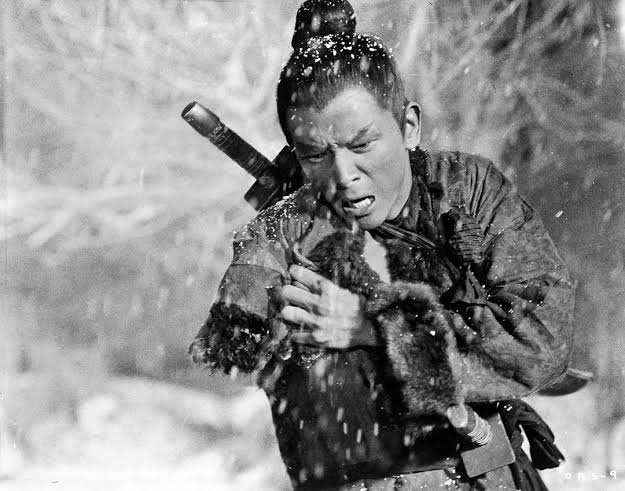
The Shaw Brothers studio in Hong Kong was responsible for producing some of the greatest Wushu (martial arts) films of all time. Kung fu flicks flooded American drive-in theaters and grindhouses in the 1970s, and some of the most memorable films came courtesy of Shaw Brothers. But the style and genre of film most Americans associate with Shaw Brothers was relatively new to the studio, and these movies were part of a new generation Wushu action flicks that was ushered in during the 1960s with titles like the seminal classic One-Armed Swordsman.
Before the 1960s most martial arts films were more theatrical, drawing influence from the legendary Peking Opera. The action sequences were somewhat unsophisticated, and Hong Kong audiences had grown tired of what was being offered. What was proving to be popular were the gritty Japanese samurai films, which had started to influence Hong Kong filmmaking in the 1960s. Believing that the aesthetic of the samurai films could be merged with the conventions of martial arts films, Shaw Brothers set out to reinvent Hong Kong Cinema.
One of Shaw Brothers’ first forays into what would become the new wave of kung fu flick was King Hu’s tremendously influential 1966 film Come Drink with Me. The following year saw the release of Chang Cheh’s One-Armed Swordsman, which is widely considered by many historians to be the film most responsible for setting the tone and style of the modern martial arts film.
The action begins when evil assassins come to kill the headmaster of a powerful and prestigious school of kung fu. Faithful servant Fang Cheng (Feng Ku) defends the life of his master, and is killed in the process, but not before pleading with his master to look after his son, Fang Gang. Years later, Fang Gang has grown up–played by Jimmy Wang Yu, a former professional swimmer who made the transition to acting in the early 1960s–and is a brooding young man with a chip on his shoulder. Raised amongst the other students, all of whom come from wealthy and affluent families, Gang can’t change the fact that he is little more than a working class charity case, who owes his position in life the sacrifice his father made. This sense of alienation separates Fang from the other students, including Qi Pei Er (Yin Tze Pan), the daughter of the school’s master, who is spoiled young woman who lusts after Gang, even though she is simultaneously repulsed by his status as a commoner. During a confrontation between Gang and some other students, including Qi Pei, things get ugly, and she chops Gang’s arm off. Taking the severing of his arm as a cue that he needs to get as far away from the world of martial arts as he can, Gang flees into the countryside, where he is discovered by Hsiao (Chiao Chiao), a beautiful woman who nurses him back to health. Gang wants nothing to do with the world he has left behind, but when the gang of assassins that killed his father years earlier returns to wreak more havoc, our hero is forced to retrain himself and learn to fight with his other arm.
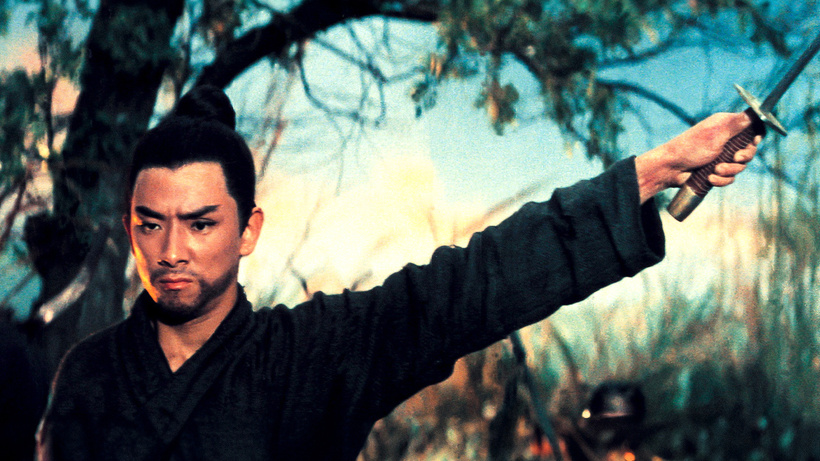
One-Armed Swordsman was a huge hit in Hong Kong as well as the rest of Asia, launching an entire series of films about one-armed fighters–man of them starring Jimmy Wang Yu–as well as a whole subgenre of martial arts flicks about disabled asskickers. But on a much larger scale, the gritty aesthetic and graphic violence that was lifted from Japenese samurai films was so well received that it became part of the new standard of filmmaking at Shaw Brothers.
Not only was director Chang Cheh influenced by Japanese films, he was also a big fan of James Dean and Marlon Brando and the new generation of brooding anti-hero they portrayed in films like Rebel Without a Cause and The Wild One, respectively. Cheh clearly infuses some of the Dean and Brando characteristics in Fang Gang, as Jimmy Wang Yu–not exactly the greatest of Hong Kong actors–does his best to play a tortured working class hero at odds with the upper crust of society. And while Wang Yu is not the greatest actor, he was successful in realizing Fang Gang as an alienated (not to mentioned broken) member of the working class, which is what led to the film and the character’s enduring popularity.
It is important to realize that One-Armed Swordsman does not look or feel like many of the martial arts films of the 1970s and 80s. This is the film that set standard and laid the ground work for what was to come. This is to martial arts films what The Searchers and Ride the High Country were to morally ambiguous westerns like The Wild Bunch and High Plains Drifter that came along in later years. Some people may be put off by the film’s slower pace, but that is not enough of a reason to not watch this film. One-Armed Swordsman is visually beautiful, with a tone and style that is so dynamic you can see within it the decades of other films that followed in its wake, drawing deep from its well of influence.
This episode of Missing Reel is dedicated to zombie movies.