by David F Walker | Oct 14, 2026 | News & Updates
Welcome back to another installment of Projects That Never Happened (PTNH), where I share various projects that never came together. This time around we’re going back to the early 2000s (though I can’t remember the exact year). I had developed a mini series called TOKEN, about a former superhero who comes out of retirement to save the world. It was a dark, cynical story about Onyx, a Black superhero who spent his crime-fighting career being treated like nothing more than a token sidekick. When his former partner in crime-fighting is brutally murdered, Onyx returns after more than twenty years.
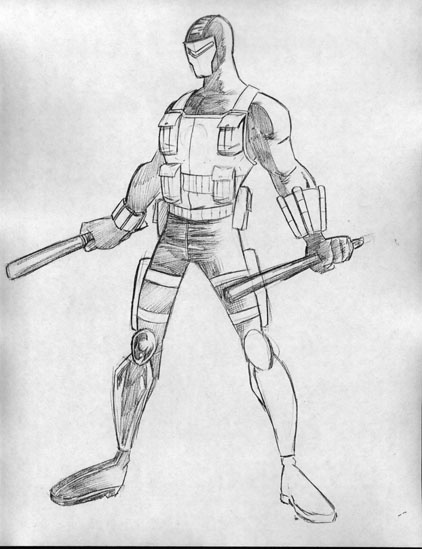
I worked with my good friend Robert Love, who did a bunch of character designs of Onyx, some of the supporting characters, and even penciled the first five or six pages. But the project never got any further along than that. Only a few images still exist, but the vast majority of the material has been lost.
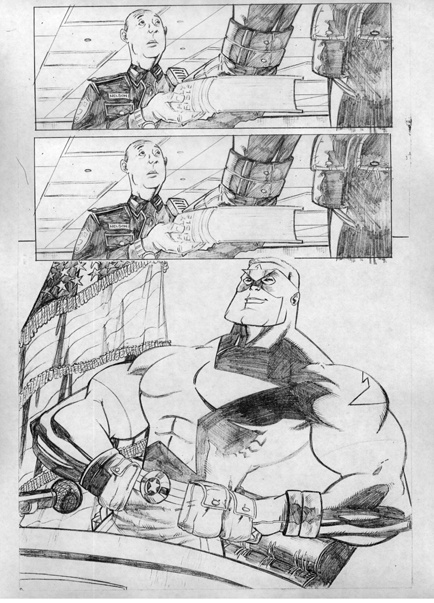
This is the only page from TOKEN that still exists.
Character design for Crusader
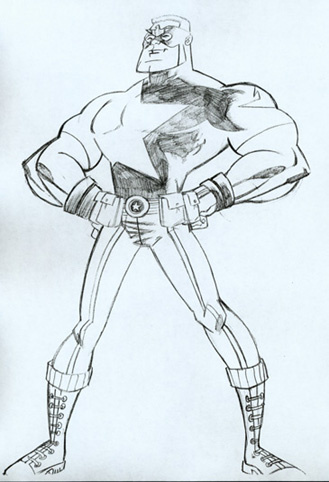
Character design for Democracy Defender
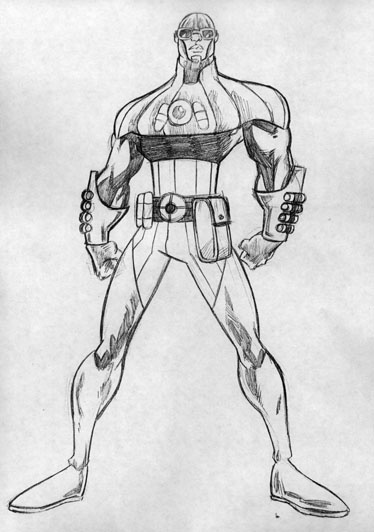
Character design for Ghetto Blaster
Once in a while I think about returning to this project, but it has yet to happen. Somewhere, on one of my countless external hard-drives, there are scripts for the entire series (I think it was four issues)…but I’m too lazy to look for them.
by David F Walker | Oct 9, 2026 | News & Updates
1974 director: Jack Arnold; starring: Fred Williamson, D-Urville Martin, William Smith
Former football star Fred Williamson had already established himself as an actor with his recurring role on television’s Julia, and in film with Robert Altman’s MASH and Otto Preminger’s Tell Me That You Love Me, Junie Moon. But it was the controversially-named blaxploitation western The Legend of Nigger Charley that launched his career as an iconic action star in 1972. Williamson followed up in 1973 with the inferior sequel The Soul of Nigger Charley, which was nonetheless a box office hit. Two years later, Williamson would return in a third western–with three more to follow–that sought to capture the success of the Nigger Charley movies. Boss Nigger, while having nothing to do with the previous films other than the incendiary word in title and the appearance of co-star D’Urville Martin, was mistaken by many to be the third film in a series that started with a pair of not-that-good entries. The result is that Boss Nigger, also known as Boss, also known as The Black Bounty Hunter and The Black Bounty Killer, never really got the attention is deserved, or the recognition as the best of Williamson’s western adventures.
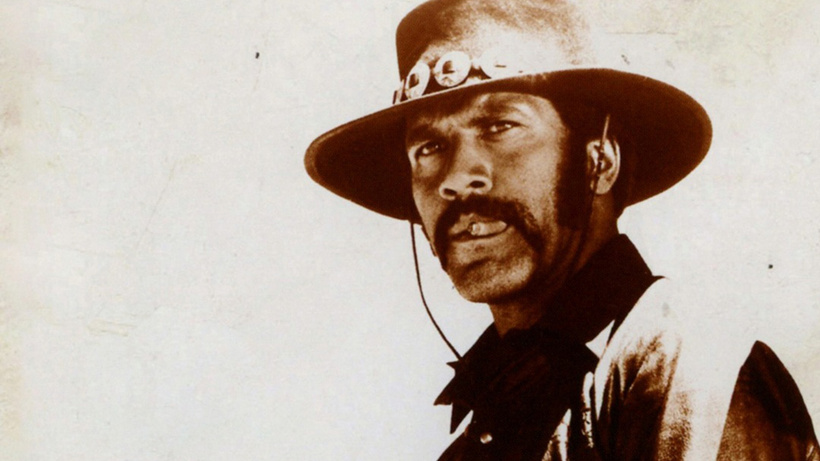
Williamson and Martin are at the top of their game as Boss and Amos, two ex-slaves turned bounty hunters that would rather bring ’em back dead than alive. Boss and Amos are on the trail of outlaw Jed Clayton (the ever-evil William Smith), who is hiding out near a small prairie town that has no sheriff. Boss manages to bully the local crackers into naming him sheriff and Amos deputy; but his real plan is to lure Clayton out of hiding. While they are waiting for Clayton to show his face, Boss and Amos take pleasure in wreaking havoc on the town bigots (think of Clint Eastwood High Plains Drifter, only with a blaxploitation slant). They post a set of new laws, that includes making it an offense for white people to call them “nigger”–a crime punishable by a $20 fine or two days in jail. But the fun and games are soon over, and the poop hits the fan when Clayton finds out that Boss has been filling that gang leader’s flunkies full of lead. Clayton takes out his anger on the town, as he sets things up for a final showdown with Boss.
With hundreds of films produced during the blaxploitation movement of the 1970s, there were surprisingly very few westerns to emerge during the decade (and most of them featured Fred Williamson). Several of these films were informed by the popular spaghetti westerns produced in Europe that were just starting to slow down in the 1970s. Of the handful of blaxploitation westerns, only Charley One Eye, starring Richard Roundtree and Take a Hard Ride with Williamson, Jim Brown and Jim Kelly were true Eurowesterns. But you wouldn’t know that by watching Boss, which feels a bit like what Blazing Saddles would have been if it were made by an Italian director like Sergio Corbucci (Companeros) or Enzo Barboni (My Name is Trinity). A low-budget mix of gritty action with a decent helping of comedy, Boss seems to draw more inspiration from the Italian filmmakers that reinvented the western in the 1960s than directors like John Ford and Howard Hawks, who defined the genre in earlier decades. The result is something along the lines of a blaxploitation version of the Trinity films, the comedic spaghetti westerns starring Terence Hill and Bud Spencer.
Boss is not, by any stretch of the imagination, what anyone could consider a great film–unless, of course, you’re comparing it to some of Williamson’s other westerns, most notably the supremely terrible Adios, Amigos. Williamson’s script for Boss, however, is arguably the best thing he’s ever written. And while veteran director Jack Arnold (look up his credits for a truly impressive resume) is clearly limited by a low budget and meager production resources, he still manages to deliver a film that is competent and entertaining. Leon Moore’s funky soundtrack helps propel the film, making Boss one of the better entries in the western subgenre of blaxploitation.
by David F Walker | Sep 22, 2026 | News & Updates
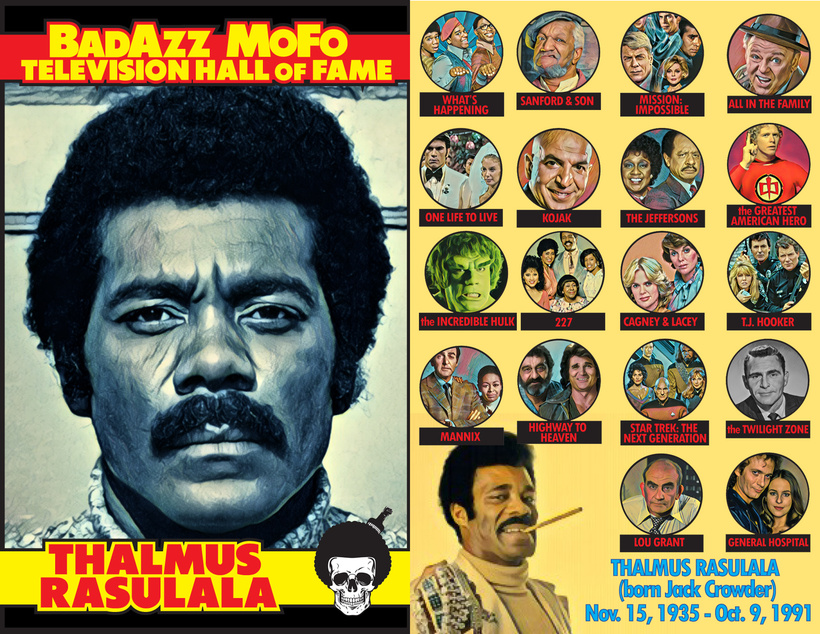
Welcome to the BadAzz MoFo Television Hall of Fame, where we celebrate the careers of Black actors and their iconic guest performances on various television series. Today we honor the late, great Thalmus Rasulala.
by David F Walker | Sep 15, 2026 | News & Updates
GONE ARE THE DAYS 1963 (a.k.a. The Man from C.O.T.T.O.N.; Purlie Victorious; Honeychile, It’s The Man from C.O.T.T.O.N ) director: Nicolas Webster; starring: Ossie Davis, Ruby Dee, Sorrell Booke, Godfrey Cambridge, Alan Alda, Beah Richards
One of the most significant Black films of the early 1960s was also one of the biggest financial failures. Based on the hit play Purlie Victorius written by Ossie Davis, the 1963 film Gone Are the Days was an eagerly anticipated film with high hopes for its success. Davis wrote the screenplay and stars as Reverend Purlie Victorious Judson, a fast-talking reverend who returns to the backwoods of Cotchipee County in rural Georgia, and the cotton plantation he fled when he was much younger. The plantation is owned by Ol’ Cap’n Stonewall Jackson Cotchipee (Sorrell Booke), an old-school southerner who misses the days of slavery and laments the recent Supreme Court decision regarding segregation.
Ol’ Cap’n Cotchipee keeps the sharecroppers on his plantation in check through fear and intimidation, and it was after a beating by him that Purlie ran away years earlier. Returning home after twenty years, Purlie has a plan to get even with Cotchipee. With help from the love of his life, Lutiebelle Gussie Mae Jenkins (Ruby Dee), the preacher plans to con the plantation owner out of $500, which Purlie will use to start a church. Things go wrong, and Purlie finds himself on the run once again, but when Ol’ Cap’n makes in appropriate overtures toward Lutiebelle, the preacher goes into a murderous rage, and sets out to confront the man that has oppressed him and his family for decades.
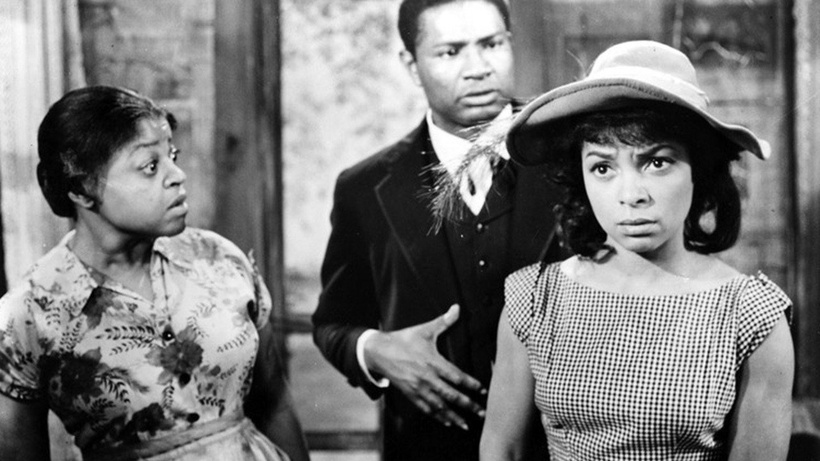
Co-starring Davis’s wife Ruby Dee, comedian Godfrey Cambridge, stage veteran Beah Richards, and co-produced by Brock Peters, Gone Are the Days was a dark satirical attack on the contemporary southern United States that was violently opposed to desegregation. Unfortunately, the broad comedy that had played well on the stage was lost on liberal White film audiences that mistook the comedic deconstruction of old stereotypes as actual stereotypes, and southern audiences refused to even see the movie. Complicating matters were the drastic changes that had occurred in the Civil Rights Movement in the time between the Broadway debut of Purlie Victorius in 1961 and the release of Gone Are the Days in 1963. Civil Rights leader Medgar Evers was murdered in his own driveway by a member of the Ku Klux Klan less than two months before the release of Gone Are the Days, which arrived in theatres a few weeks before the historic March on Washington, where Dr. Martin Luther King Jr. delivered his famous “I Have a Dream” speech.
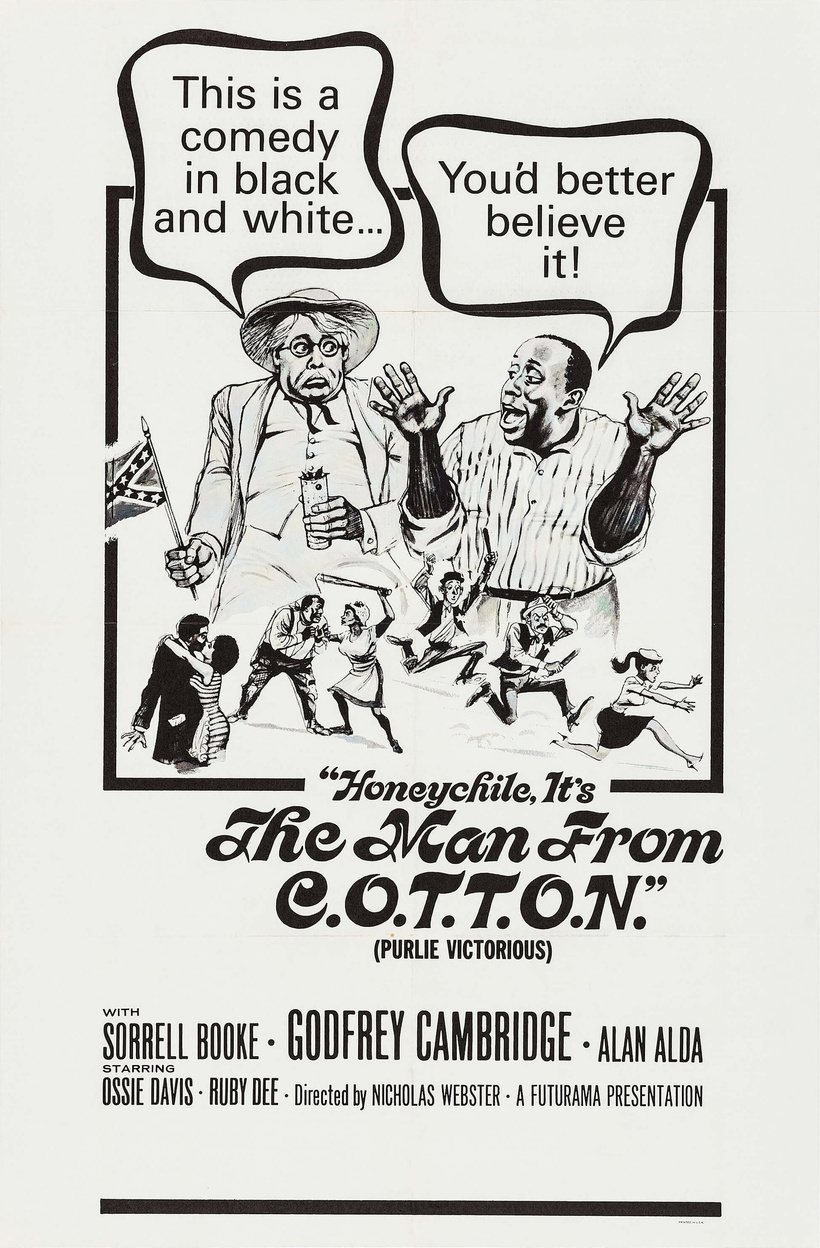
Gone Are the Days was a financial failure, despite attempts to re-release the film under various other titles, including the ridiculous The Man from C.O.T.T.O.N., and the slightly longer, and even more ridiculous Honeychile, It’s The Man from C.O.T.T.O.N. But despite the poor timing of the release and disastrous performance at the box office, the film works as a comedy. A brilliant comedy at that. Davis’s script is a wicked farce brimming with tongue-twisting poetic dialog and profound observations about racism and civil rights. And when you consider that the play and the film came along in the early 1960s, the script’s sharp poignancy becomes even more profound.
Davis, whose career had been filled with memorable performances, is at his best as both a writer and an actor, commanding the screen. But he is not alone. Ruby Dee is hilarious as his awe-struck love, and Alan Alda, in one of his first roles, gives a great performance as Charlie, the progressive thinking son of Ol’ Cap’n Cotchipee. If there is anyone who steals the film, however, it is Sorrell Booke as Cotchipee. Probably best known for his work on the television show Dukes of Hazard, where he co-starred as Boss Hog, Booke is amazing as the hopelessly racist plantation owner that would rather die than see the world around him change. Booke’s scenes with Godfrey Cambridge, co-starring as Purlie’s brother Gitlow, are comic perfection.
Filmed on a low budget with fake sets that resemble those of a stage production, some people might be initially put off by Gone Are the Days. From a technical standpoint the film can be a bit crude. Filmed by director Nicolas Webster as if it were a play, with long single takes and few edits (and many of the edits are a bit awkward), the movie relies on the performances of the actors to create comedic timing. And while the performances are all fine-tuned works of comedy, the entire cast brings the large, over-the-top energy of a stage-bound farce to the screen. In an era of sit-com derived humor and toilet jokes, the intelligent, screwball nature of Gone Are the Days may seem a bit outdated and foreign to contemporary audiences. But this is what a great comedy is and should be.
by David F Walker | Sep 14, 2026 | News & Updates
LADY COCOA (a.k.a. POP GOES THE WEASEL) 1975, starring Lola Falana, Gene Washington, Mean Joe Greene
Speaking of films that never stop trying to entertain, while simultaneously failing to exhibit a true understanding of cinematic craft, Matt Cimber’s LADY COCOA (a.k.a. POP GOES THE WEASEL) is something akin to the little-exploitation-movie-that-could. That’s to say that the film seems to be mumbling to itself, “I think I can be exploitative, I think I can be exploitative,” over and over again, while never fully committing to the kind of sleaze one hopes for when watching grindhouse schlock. It’s a movie that’s too polite to offend you with gratuitous sex or violence, so it just relies on general filmmaking ineptitude to alienate the audience.
Lola Falana stars as Cocoa, who has been in a Nevada prison for refusing to testify against her mobster boyfriend. After more than a year in the joint, Cocoa’s tired of doing hard time, and decides to testify in exchange for her freedom…or at least that’s what she says. Unfortunately, it would seem Cocoa’s boyfriend is worried that she really will spill the beans, so he sends some muscle to kill her at the hotel where she is being held while awaiting trial. Meanwhile, some sparks are starting to fly between Cocoa and Doug (Gene Washington), one of the cops protecting her, maining there will be some kind inevitable showdown that may be exciting, or maybe boring as hell.
LADY COCOA was actually Matt Cimber’s third blaxploitation film, and while it isn’t nearly as good as the not-that-good-but-not-totally-terrible BLACK SIX, it is not without its charms – specifically Lola Falana, who is just plain fun to watch. Now, I’m not saying she’s “all that and a bag of chips,” but when you stack her up against actresses like Philomena Nowlan (MISS MELODY JONES) or Johnnie Hill (VELVET SMOOTH), you realize you’re looking at an Oscar caliber performance by comparison. Even though Falana does start to get a bit annoying with her whining, she’s pretty much the only person involved in the movie that seems to know what they’re doing. Even Matt Cimber is uncertain of what he’s doing, so much so that he remade LADY COCOA as FAKE OUT in 1982, with Pia Zadora replacing Lola Falana (because apparently Cimber likes actresses whose first and last names end with the letter ‘A.’

THE CANDY TANGERINE MAN 1975, starring: John Daniels, “the actual hookers and blades of Sunset Strip in Hollywood”
Even if director Matt Cimber had only made THE BLACK SIX and. POP GOES THE WEASEL, he would’ve earned a special place in the hearts of the most diehard blaxploitation fans; because while neither film is especially good, both refuse to be absolutely terrible in a way that defines so many other blaxploitation flicks. But it is not THE BLACK SIX or LADY COCOA that has earned Cimber a special place in the Schlock Cinema Hall of Fame, for neither of those films have the unbridled audacity or pure bravado of THE CANDY TANGERINE MAN, a movie that puts the “exploit” in exploitation. A tale of dual identities and one black man’s struggle to find financial success in world plagued by systemic racism and limited opportunities, THE CANDY TANGERINE MAN is a pimp movie unlike any other pimp movie ever made. John Daniels stars as Ron Lewis, a loving husband and father in the suburbs. But at night, Ron Lewis transforms into The Baron, a cold-blooded pimp runnin’ ho’s and puttin’ foot to ass on L.A.’s Sunset Strip. Between battling the Mafia, keeping the women in his stable in line, dealing with corrupt cops, and making sure his family believes he’s a traveling salesman on the road five days out of the week, The Baron has his hands full. In one night alone, The Baron pleasures one of his women, pulls another into his stable, and lays waste to five fools who try to come between him and his game, before returning to his unsuspecting wife, who wants him to fix a busted window in the bathroom. It’s a tough life, and as Big Daddy Kane once said, “Pimpin’ ain’t easy.” Lucky for The Baron he’s got a strong pimphand—not to mention his pimpmobile, outfitted with machine guns hidden behind the headlights. In fact he’s more than a pimp, he’s the Candy Tangerine Man—a super pimp, with pimpabilities far beyond those of mortal pimps.
By the time this film was released in 1975, the blaxploitation cycle had pretty much been played out. A political backlash that began in 1972 surrounding the film SUPER FLY charged that most of the films being produced for black audiences focused on morally suspect characters, and glorified black criminality. Organizations like NAACP and CORE took issue with movies like SUPER FLY and THE MACK, but the vast majority of all blaxploitation films were pretty tame when held up next to THE CANDY TANGERINE MAN. If, in fact, any of the movies produced during the blaxploitation era were worthy of harsh criticism for being morally corrupt, and pandering to the exploitative elements of sex and violence, it is this film. If there was ever a film that could be described as depraved grindhouse swill—in the most positive of contexts, mind you—it would have to be THE CANDY TANGERINE MAN. The film contains everything from golden showers to rape to mutilation (one hooker gets her breasts cut off, and a mob enforcer loses a hand in a garbage disposal). And of course there is the cast of extras, which, according to the credits, features “the actual hookers and blades of Sunset Strip in Hollywood,” all of whom lend an air of authenticity to the movie, while also being some of the most unattractive people captured on film.
John Daniels gives what is arguably the finest performance of his career as Ron Lewis/The Baron. Daniels is best known by blaxploitation fans for this film, and director Greydon Clark’s mind-melting sleazefest BLACK SHAMPOO. Daniels also appeared in such films as HIT MAN (the blaxploitation remake of GET CARTER), BARE KNUCKLES, and GETTING OVER (which he co-wrote and co-produced). Outside of film, Daniels was a successful businessman, magazine publisher, song writer, nightclub owner, and manager of the all-women singing group The Love Machine. His Los Angeles nightclub, Maverick’s Flat, is a place of legend, having played host to some of the greatest R&B and funk acts of all time. Acting was never Daniels’s greatest passion, which is fortunate, since he has a rather limited range. But his limited skills as an actor are not so much a reflection of whatever talent he may or may not have possessed, but rather an indictment on the work of director Matt Cimber.
Having already established that the crafting of fine cinematic fare was not his strong point, Cimber sticks to what he does best with THE CANDY TANGERINE MAN. And what he does best is craft low budget exploitation flicks meant to offer momentary distraction from the outside world. In the smoke-filled grindhouse theaters, and at the drive-in theaters that showed movies like THE CANDY TANGERINE MAN sandwiched in with other movies as part of double and triple features, the standards of determining good from bad are always in flux. THE CANDY TANGERINE MAN is one of those films that walk the fine line between sleazy and charming, and to be perfectly honest, it takes a special person to appreciate that fine line. That’s not to say that the film is not worth watching, or even enjoying with a sort of sadistic, depraved pleasure, because if that’s your cup of tea, then this cup runneth over. By the stick used to measure movies of this nature, THE CANDY TANGERINE MAN is a good film. Of course, “good” is a purely subjective standard that must be applied accordingly.
by David F Walker | Sep 11, 2026 | News & Updates
by David F Walker | Sep 9, 2026 | News & Updates
by David F Walker | Sep 8, 2026 | News & Updates
THE BLACK SIX 1974, starring: Gene Washington, Carl Eller, Lem Barney, Mercury Morris, Willie Lanier, Mean Joe Greene
On paper, it must’ve seemed like a great idea—take two popular film genres (blaxploitation and outlaw biker), mash ‘em together, and then throw in a cast of six NFL players, all ready to kick whitey’s ass. There’s no way this combination of elements, seemingly blessed by the gods of exploitation cinema, could not have seemed like a sure hit. And to be clear, the definition of “sure hit” must be contextualized within the framework of an era in American film when low budget, independently produced features often were financed from questionable revenue sources often looking to launder money from ill-gotten gains. This is not to say that THE BLACK SIX was financed with money from tax-shelter-seeking investors or Mafia dons looking to wash their dirty money, because that’s not the case. No, THE BLACK SIX is merely one of the most potentially brilliant blaxploitation films of all time, produced under a series of quality-limiting factors, which sadly resulted in the film’s inability to become the work of genius it could have been.
THE BLACK SIX starts with the violent murder of high school student Eddie Daniels (Robert Howard), who is killed by a gang of redneck bikers that aren’t too happy that a young black man is consorting with a white girl. Word of Eddie’s death reaches his older brother Bubba (Gene Washington), a disillusion veteran of the war in Vietnam, who has not been home in years. Bubba has taken to a nomadic life of tooling around the country with five of his fellow vets, who round out this war-weary motorcycle gang. Bubba and his crew have seen enough violence in the ‘Nam, and they would love to leave the killing behind them. Despite the threat of the racist bikers that killed Eddie, however, Bubba and his friends— Junior Bro Williams (Carl Eller), Frenchy LaBoise (Lem Barney), Bookie Garrett (Mercury Morris), Tommy Bunka (Willie Lanier), and Kevin Washington (“Mean” Joe Greene)—decide something must be done. The murder of Eddie demands either justice or revenge—or both—and the Black Six are just the guys to dispense fistfuls of each.
The brainchild of writer-producer-director Matt Cimber, THE BLACK SIX is a shining example of everything that is both right and wrong about the blaxploitation films of the 1970s. It is an earnest attempt at making an exploitation movie with seems to have something to say—though it’s not clear exactly what that something is. With Cimber’s story, inspired by Alfred, Lord Tennyson’s poem “The Charge of the Light Brigade,” and a screenplay by Mikel Angel (a.k.a. George Theakos), THE BLACK SIX holds the promise of weighing in on some heavy subjects. First, there’s the murder of Eddie. To be clear, the killing of Eddie is a modern-day lynching. He is murdered because he did not “know” his place, recalling the real life slayings of countless other African Americans, whose crimes were often nothing more than looking at a white woman. Then there is the commentary on returning war vets incapable of fitting back in with mainstream American society. And finally, there is the message of justice for the black man in America. All of this is hinted at, but never fully explored, making it unclear if THE BLACK SIX is actually trying to say something. If there is in fact a message, it is largely lost under the crushing weight of a poorly written script, a cast of non-actors, and half-ass production values, all brought together on a shoe-string budget. But as any true fan of exploitation films can tell you, the shortcomings and ineptitudes that don’t kill certain movies, only makes them better. Such is the case of THE BLACK SIX.
With two of the biggest blaxploitation stars being Jim Brown and Fred Williamson—both ex-NFL players—it must have seemed like a stroke of pure genius to cast a film with six NFL players. Unfortunately, even the combined strength of the Washington, Eller, Barney, Morris, Lanier, and Greene is barely enough to carry THE BLACK SIX. This is not meant to dismiss the acting of the main cast, because it isn’t really their fault. Though Brown and Williamson were the biggest stars to come out of professional football, they weren’t alone. Bernie Casey (HIT MAN) was a professional ball player, as was Tony King (GORDON’S WAR), and Carl Weathers, who would go on to stardom in ROCKY, after a string of supporting roles in movies like FRIDAY FOSTER and BUCKTOWN. There was also Tim Brown and Roy Jefferson, who starred in lesser-known blaxploitation entries BLACK HEAT and BROTHERHOOD OF DEATH, respectively. It is clear that the biggest problem with THE BLACK SIX is not the limited acting chops of the cast, but the writing, direction, and overall production of the film.
With the deck stacked against THE BLACK SIX, it is any wonder that the film works as well as it does. And to be perfectly honest, there are moments to be found in this film that could almost be confused with cinematic brilliance. In one standout scene, the black bikers try to order ham sandwiches and Pabst Blue Ribbon from a bar, only to be denied service by the racist owner. Left with little choice, the gang does what anyone would do in this situation—they literally tear the place down, while the owner screams, “Help, help, the niggers are tearin’ down my bar!”
It’s moments like this—crafted with all the quality and attention to acting and direction found in porn from the same era—that gives THE BLACK SIX its oddball charm. And if the film simply had more scenes like this one, it would be a priceless gem. That’s not to say this is a good film, because it really isn’t, although it is better than so many other genre entries. It could be argued that whatever redeeming qualities there are to be found in THE BLACK SIX comes from it the fact that when it comes to blaxploitation flicks the bar is set ridiculously low. For all of its shortcomings, THE BLACK SIX will never be as bad as SPEEDING UP TIME, or THE GUY FROM HARLEM. Truth be told, however, it’s not the comparison to the gutbucket quality of lesser Z-grade black action films that gives THE BLACK SIX whatever quirky charm it has. No, for lack of any other better description, this is a film that simply refuses to be as terrible as it should be. Other films, like BLACKENSTEIN and VELVET SMOOTH, give up the ghost without even trying—as if merely aspiring to be entertaining is too much work. Despite everything working against it, however, THE BLACK SIX never stops trying to entertain, even when it is terrible.
by David F Walker | Sep 7, 2026 | News & Updates
Originally published July 26, 2018
by David F Walker | Sep 4, 2026 | News & Updates
Originally posted July 23, 201