by David F Walker | Oct 23, 2026 | News & Updates
1989 director: Wendell B. Harris, Jr.; starring; Wendell B. Harris, Jr.
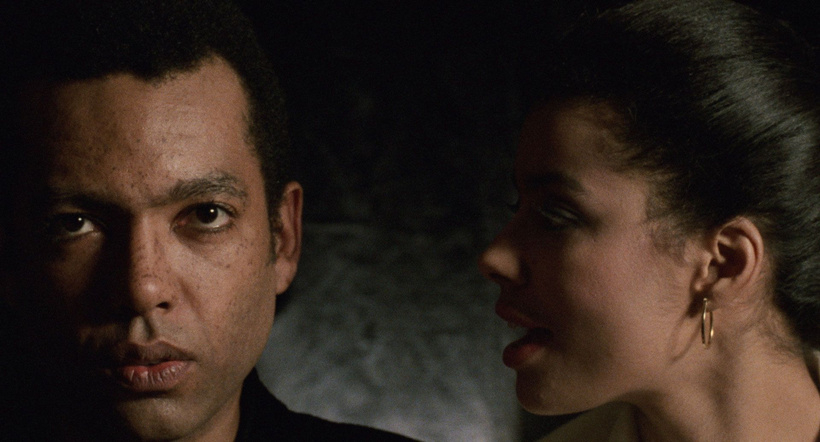
After premiering at the Toronto Film Festival in 1989, Wendell B. Harris, Jr.’s Chameleon Street went on to play at the Sundance Film Festival in 1990, where it won the Grand Jury Prize, the same award given to sex, lies and videotape the year before. This was when Sundance was just beginning to really make a name for itself, and a new wave of independent American cinema was emerging that was finding more of an audience in the mainstream. Filmmakers like Spike Lee and Jim Jarmusch helped lay down the groundwork for this new wave of Sundance/Miramax indie films of the 1980s and 90s, which helped launch the careers of Steven Soderbergh, Quentin Tarantino, Reginald Hudlin and Kevin Smith to name a few. But while those filmmakers and their debut features have become fixtures of the independent cinema landscape, Harris and Chameleon Street somehow managed to slip through the cracks, where is languished for years as something of a cinematic urban legend. But if there ever was a film that richly deserved being “discovered,” it would have to be Chameleon Street, a hilarious, poignant and near-brilliant character study that offers insight into race relations and human nature in a way that has not been done in quite the same manner either before or since.
Harris wrote, produced, directed and stars in this unconventional mix of humor and drama as William Douglas Street, a real-life conman from Michigan who earned legendary status for his elaborate scams. At various points in his career, Street pretended to be a lawyer, a journalist and a doctor–he even performed surgery–all in the attempt to find some sort of financial success. But as presented by Harris, Street is not so much a conman looking to get paid, as he is a body always in search of a new identity to define himself. Harris plays Street as a smug opportunist who is more often than not, the smartest person in the room. At times, it seems like Street’s elaborate ruses are meant more as challenges for himself, than for those around him. It’s not so much if he can fool other people as it is whether or not he can successfully become whatever it is he has set out to become. This makes for a far more fascinating and complex character than a typical, greedy conman.
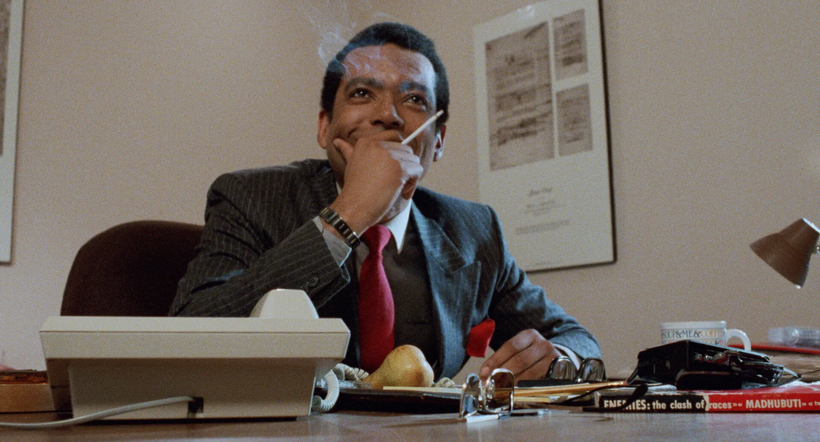
There is very little conventional about Chameleon Street as the film moves in a non-linear, often choppy, and at times confusing manner, with Street narrating as if he is in the room with the audience. Characters are introduced, and it can be hard to remember if Harris has already brought them in to the story, or if he is just dropping them into the narrative without explanation. In any other film, that might be a detriment, but Harris makes it work in Chameleon Street, and it becomes almost a tool of deception like those used by Street himself. And whatever pitfalls the film may have–which include some of the obvious stumbling blocks of low-budget films with limited resources–Harris’s film is a triumph. His script is nothing short of brilliant, with some truly inspired moments of dialog. In one of the film’s best scenes, a white racist calls Street a “porch monkey,” to which he responds, “You did say more funky? That is what he said, isn’t it, more funky? Not porch monkey. More funky?” The confrontation builds with the intellectually superior Street verbally assaulting the racist, only to get his ass kicked. While in prison, Street finds himself about to be turned into the wife of another prisoner, an experience he describes to the audience by telling them, “I could smell his genitalia as it wafted across the cell.” But as with most of the dire circumstances he finds himself in, Street is able to pretend to be something–in this case, crazy–that helps him to escape his fate. And if any of this sounds remotely familiar, it is because at its best moments, Chameleon Street channels both the humor, rage and observational dexterity of comedians like Lenny Bruce and Richard Pryor. Harris manages to deliver the sort of film that aside from his concert movies, Pryor never seemed to be able to make–one that refuses to dull the sharp edges of humor in favor of finding a wider audience.
The story as I heard it was that Harris was offered a deal for the rights to Chameleon Street, so that it could be remade with a white actor in the lead role. Supposedly, it was felt that a mainstream audience would not believe that a black man could successfully pull off scams that had him pretending to be things like a doctor or a lawyer. Whether or not this is true, I can’t say (but it does not sound all that absurd to me). Whatever the reason or reasons may be, Chameleon Street became one of those films that was never given the opportunity to shine like it deserved. Chameleon Street was released on VHS in the ‘90s, DVD in 2007, and Blu-ray in 2023, but the film has never really managed to rise above it’s cult status. Thankfully, thirty-six years after a nearly nonexistant release, Chameleon Street is easy enough to find a various streamers, as well as Blu-ray, providing an opportunity for the film to be seen and appreciated. And even though it is nearly forty years old, Harris’ movie has aged exceptionally well, and perhaps now it can finally be recognized as the important work of cinema it is.
by David F Walker | Oct 14, 2026 | News & Updates
Welcome back to another installment of Projects That Never Happened (PTNH), where I share various projects that never came together. This time around we’re going back to the early 2000s (though I can’t remember the exact year). I had developed a mini series called TOKEN, about a former superhero who comes out of retirement to save the world. It was a dark, cynical story about Onyx, a Black superhero who spent his crime-fighting career being treated like nothing more than a token sidekick. When his former partner in crime-fighting is brutally murdered, Onyx returns after more than twenty years.
I worked with my good friend Robert Love, who did a bunch of character designs of Onyx, some of the supporting characters, and even penciled the first five or six pages. But the project never got any further along than that. Only a few images still exist, but the vast majority of the material has been lost.
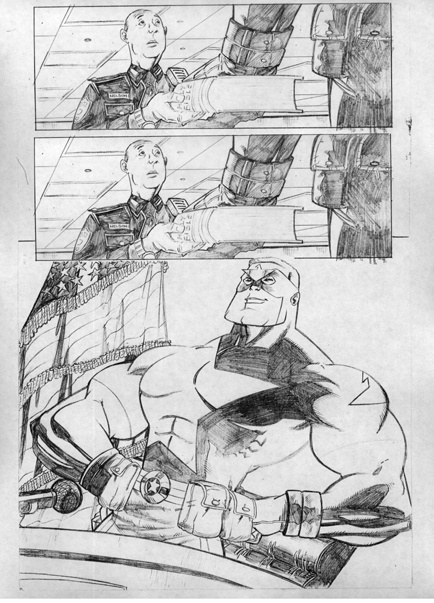
This is the only page from TOKEN that still exists.

Character design for Crusader
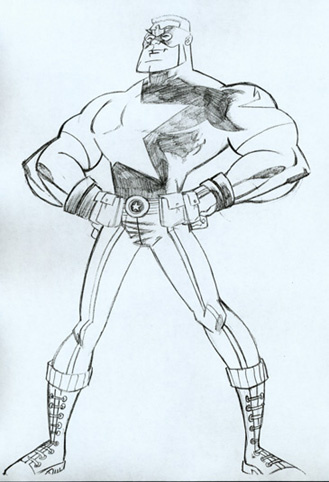
Character design for Democracy Defender
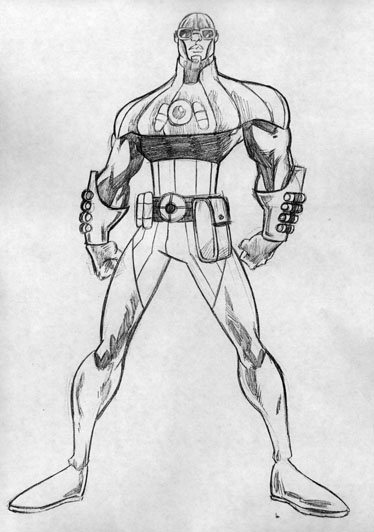
Character design for Ghetto Blaster
Once in a while I think about returning to this project, but it has yet to happen. Somewhere, on one of my countless external hard-drives, there are scripts for the entire series (I think it was four issues)…but I’m too lazy to look for them.
by David F Walker | Oct 9, 2026 | News & Updates
1974 director: Jack Arnold; starring: Fred Williamson, D-Urville Martin, William Smith
Former football star Fred Williamson had already established himself as an actor with his recurring role on television’s Julia, and in film with Robert Altman’s MASH and Otto Preminger’s Tell Me That You Love Me, Junie Moon. But it was the controversially-named blaxploitation western The Legend of Nigger Charley that launched his career as an iconic action star in 1972. Williamson followed up in 1973 with the inferior sequel The Soul of Nigger Charley, which was nonetheless a box office hit. Two years later, Williamson would return in a third western–with three more to follow–that sought to capture the success of the Nigger Charley movies. Boss Nigger, while having nothing to do with the previous films other than the incendiary word in title and the appearance of co-star D’Urville Martin, was mistaken by many to be the third film in a series that started with a pair of not-that-good entries. The result is that Boss Nigger, also known as Boss, also known as The Black Bounty Hunter and The Black Bounty Killer, never really got the attention is deserved, or the recognition as the best of Williamson’s western adventures.
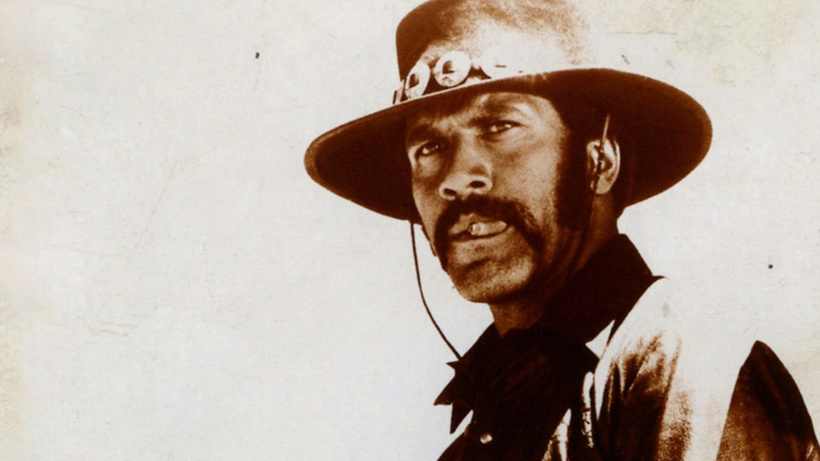
Williamson and Martin are at the top of their game as Boss and Amos, two ex-slaves turned bounty hunters that would rather bring ’em back dead than alive. Boss and Amos are on the trail of outlaw Jed Clayton (the ever-evil William Smith), who is hiding out near a small prairie town that has no sheriff. Boss manages to bully the local crackers into naming him sheriff and Amos deputy; but his real plan is to lure Clayton out of hiding. While they are waiting for Clayton to show his face, Boss and Amos take pleasure in wreaking havoc on the town bigots (think of Clint Eastwood High Plains Drifter, only with a blaxploitation slant). They post a set of new laws, that includes making it an offense for white people to call them “nigger”–a crime punishable by a $20 fine or two days in jail. But the fun and games are soon over, and the poop hits the fan when Clayton finds out that Boss has been filling that gang leader’s flunkies full of lead. Clayton takes out his anger on the town, as he sets things up for a final showdown with Boss.
With hundreds of films produced during the blaxploitation movement of the 1970s, there were surprisingly very few westerns to emerge during the decade (and most of them featured Fred Williamson). Several of these films were informed by the popular spaghetti westerns produced in Europe that were just starting to slow down in the 1970s. Of the handful of blaxploitation westerns, only Charley One Eye, starring Richard Roundtree and Take a Hard Ride with Williamson, Jim Brown and Jim Kelly were true Eurowesterns. But you wouldn’t know that by watching Boss, which feels a bit like what Blazing Saddles would have been if it were made by an Italian director like Sergio Corbucci (Companeros) or Enzo Barboni (My Name is Trinity). A low-budget mix of gritty action with a decent helping of comedy, Boss seems to draw more inspiration from the Italian filmmakers that reinvented the western in the 1960s than directors like John Ford and Howard Hawks, who defined the genre in earlier decades. The result is something along the lines of a blaxploitation version of the Trinity films, the comedic spaghetti westerns starring Terence Hill and Bud Spencer.
Boss is not, by any stretch of the imagination, what anyone could consider a great film–unless, of course, you’re comparing it to some of Williamson’s other westerns, most notably the supremely terrible Adios, Amigos. Williamson’s script for Boss, however, is arguably the best thing he’s ever written. And while veteran director Jack Arnold (look up his credits for a truly impressive resume) is clearly limited by a low budget and meager production resources, he still manages to deliver a film that is competent and entertaining. Leon Moore’s funky soundtrack helps propel the film, making Boss one of the better entries in the western subgenre of blaxploitation.