
GONE ARE THE DAYS 1963 (a.k.a. The Man from C.O.T.T.O.N.; Purlie Victorious; Honeychile, It’s The Man from C.O.T.T.O.N ) director: Nicolas Webster; starring: Ossie Davis, Ruby Dee, Sorrell Booke, Godfrey Cambridge, Alan Alda, Beah Richards
One of the most significant Black films of the early 1960s was also one of the biggest financial failures. Based on the hit play Purlie Victorius written by Ossie Davis, the 1963 film Gone Are the Days was an eagerly anticipated film with high hopes for its success. Davis wrote the screenplay and stars as Reverend Purlie Victorious Judson, a fast-talking reverend who returns to the backwoods of Cotchipee County in rural Georgia, and the cotton plantation he fled when he was much younger. The plantation is owned by Ol’ Cap’n Stonewall Jackson Cotchipee (Sorrell Booke), an old-school southerner who misses the days of slavery and laments the recent Supreme Court decision regarding segregation.
Ol’ Cap’n Cotchipee keeps the sharecroppers on his plantation in check through fear and intimidation, and it was after a beating by him that Purlie ran away years earlier. Returning home after twenty years, Purlie has a plan to get even with Cotchipee. With help from the love of his life, Lutiebelle Gussie Mae Jenkins (Ruby Dee), the preacher plans to con the plantation owner out of $500, which Purlie will use to start a church. Things go wrong, and Purlie finds himself on the run once again, but when Ol’ Cap’n makes in appropriate overtures toward Lutiebelle, the preacher goes into a murderous rage, and sets out to confront the man that has oppressed him and his family for decades.
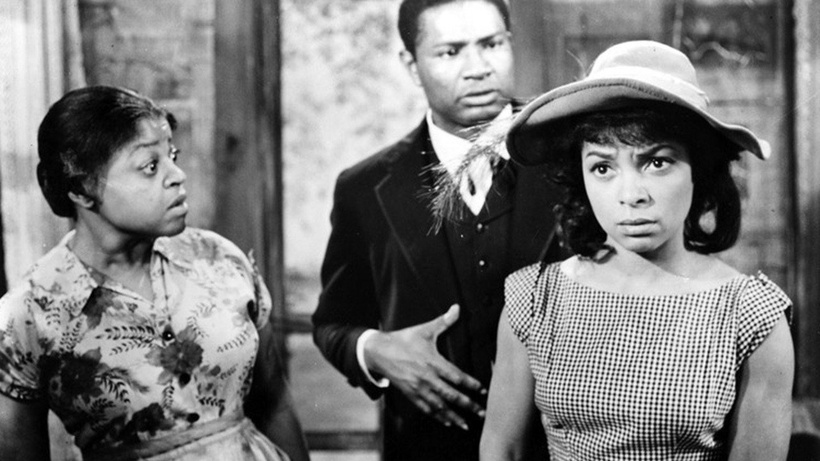
Co-starring Davis’s wife Ruby Dee, comedian Godfrey Cambridge, stage veteran Beah Richards, and co-produced by Brock Peters, Gone Are the Days was a dark satirical attack on the contemporary southern United States that was violently opposed to desegregation. Unfortunately, the broad comedy that had played well on the stage was lost on liberal White film audiences that mistook the comedic deconstruction of old stereotypes as actual stereotypes, and southern audiences refused to even see the movie. Complicating matters were the drastic changes that had occurred in the Civil Rights Movement in the time between the Broadway debut of Purlie Victorius in 1961 and the release of Gone Are the Days in 1963. Civil Rights leader Medgar Evers was murdered in his own driveway by a member of the Ku Klux Klan less than two months before the release of Gone Are the Days, which arrived in theatres a few weeks before the historic March on Washington, where Dr. Martin Luther King Jr. delivered his famous “I Have a Dream” speech.
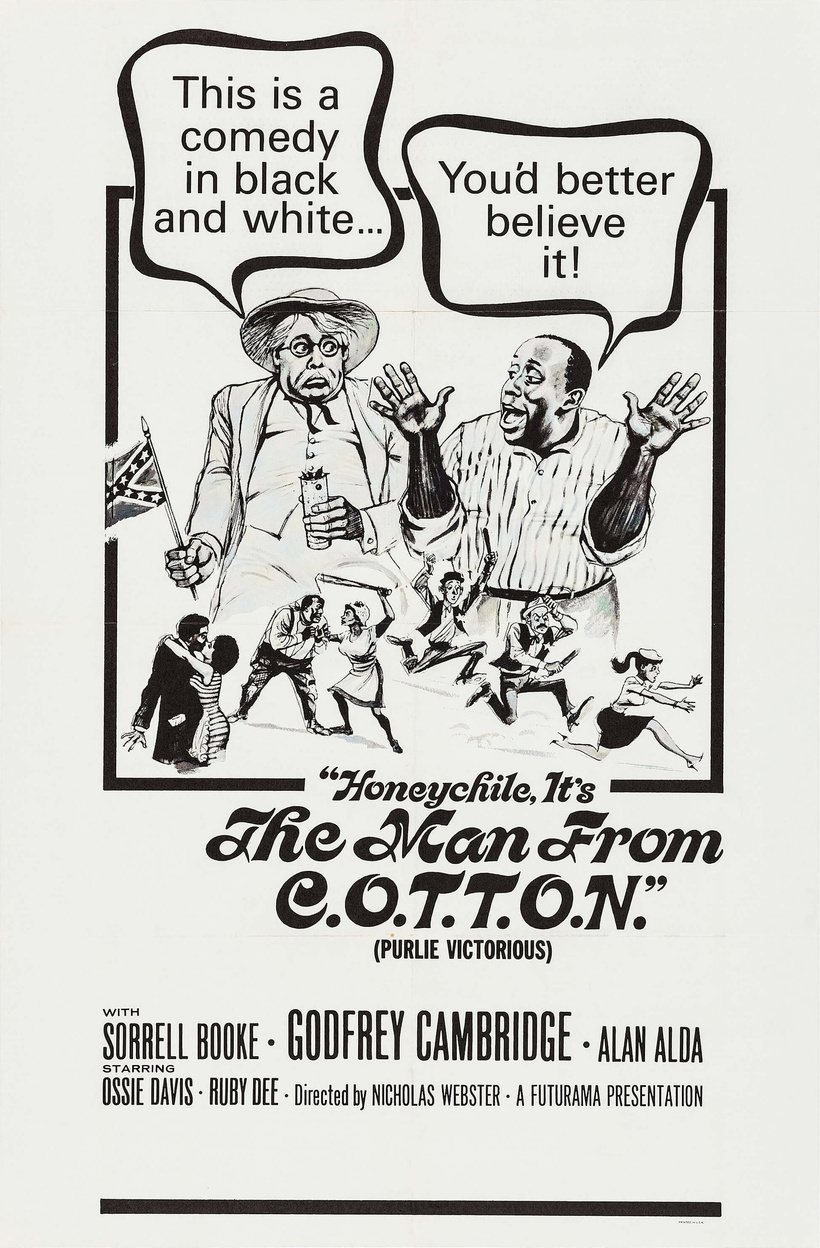
Gone Are the Days was a financial failure, despite attempts to re-release the film under various other titles, including the ridiculous The Man from C.O.T.T.O.N., and the slightly longer, and even more ridiculous Honeychile, It’s The Man from C.O.T.T.O.N. But despite the poor timing of the release and disastrous performance at the box office, the film works as a comedy. A brilliant comedy at that. Davis’s script is a wicked farce brimming with tongue-twisting poetic dialog and profound observations about racism and civil rights. And when you consider that the play and the film came along in the early 1960s, the script’s sharp poignancy becomes even more profound.
Davis, whose career had been filled with memorable performances, is at his best as both a writer and an actor, commanding the screen. But he is not alone. Ruby Dee is hilarious as his awe-struck love, and Alan Alda, in one of his first roles, gives a great performance as Charlie, the progressive thinking son of Ol’ Cap’n Cotchipee. If there is anyone who steals the film, however, it is Sorrell Booke as Cotchipee. Probably best known for his work on the television show Dukes of Hazard, where he co-starred as Boss Hog, Booke is amazing as the hopelessly racist plantation owner that would rather die than see the world around him change. Booke’s scenes with Godfrey Cambridge, co-starring as Purlie’s brother Gitlow, are comic perfection.
Filmed on a low budget with fake sets that resemble those of a stage production, some people might be initially put off by Gone Are the Days. From a technical standpoint the film can be a bit crude. Filmed by director Nicolas Webster as if it were a play, with long single takes and few edits (and many of the edits are a bit awkward), the movie relies on the performances of the actors to create comedic timing. And while the performances are all fine-tuned works of comedy, the entire cast brings the large, over-the-top energy of a stage-bound farce to the screen. In an era of sit-com derived humor and toilet jokes, the intelligent, screwball nature of Gone Are the Days may seem a bit outdated and foreign to contemporary audiences. But this is what a great comedy is and should be.