by David F Walker | May 9, 2026 | News & Updates
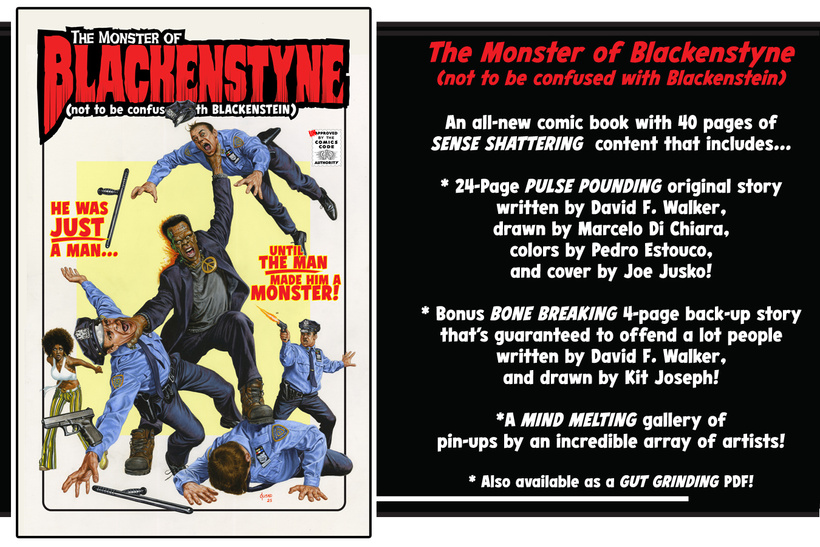
The Monster of Blackenstyne (not to be confused with Blackenstein) has reached it’s initial goal on Kickstarter! Now it’s time to make our way to the stretch goals, which includes an audio drama version of the comic, read by an “all-star” cast. From the cover by Joe Jusko, to the art by Marcelo Di Chiara, to the colors by Pedro Estouco, this is a comic you will love. And let’s not forget the offensive back-up story, and the bonus pin-up gallery that round out this amazing 40-page comic book one-shot. BUT DON’T WORRY — there’s more of The Monster of Blackenstyne (not to be confused with Blackenstein) on the way!!! You heard that right! As we speak, the first in a series of on-going short comics staring The Monster are being drawn. In fact, if we hit the second stretch goal of $20k, I will increase the page count of the comic and include an extra bone-bashing, spine-shattering story featuring The Monster doing what he does best — bashing bones and shattering spines. Please consider backing this project, and sharing it with your friends and family. HERE is a link to the Kickstarter page.
by David F Walker | May 9, 2026 | News & Updates
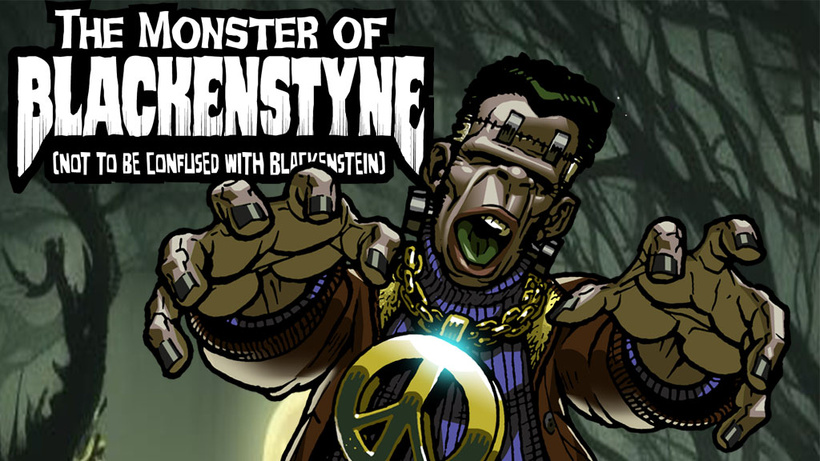
I couldn’t sleep, which isn’t that unusual for me. And my mind was racing with all kinds of creative ideas…also, not that unusual for me. But then the oddest idea came to me at about 2am — I was thinking about the 1973 movie Blackenstein, one of the worst movies ever made, and how I would have done things completely different if I’d made that movie. And in an instant, an image popped in my head of what my version of the monster would look like. I reached for a pen and drew a quick sketch (pictured above). A few minutes after that, the story came to me. Seriously. It popped in my head, I wrote down the basic plot, and vowed to turn my insomnia fueled idea into a comic. That was four years ago. Now there is a comic, it is done, and The Monster of Blackenstyne (not to be confused with Blackenstein) is a reality. Explaining this project to potential collaborators was not easy. Most people didn’t get where I was coming from. Likewise, publishers didn’t understand what I was doing, which was creating a dark satire fused with blaxploitation, written in style reminiscent of comics published in the 1970s, while trying to use the medium of comics to say something relevant, but obscuring that relevance under gratuitous violence, overwrought dialog, and pure silliness. I’m proud to say I succeeded. And as someone who is his own harshest critic, this is a project I’m proud of, due in no small part to the artists who brought it to life, Marcelo Di Chiara and Pedro Estouco. He is an unedited/uncorrected glimpse at the first page of the comic…
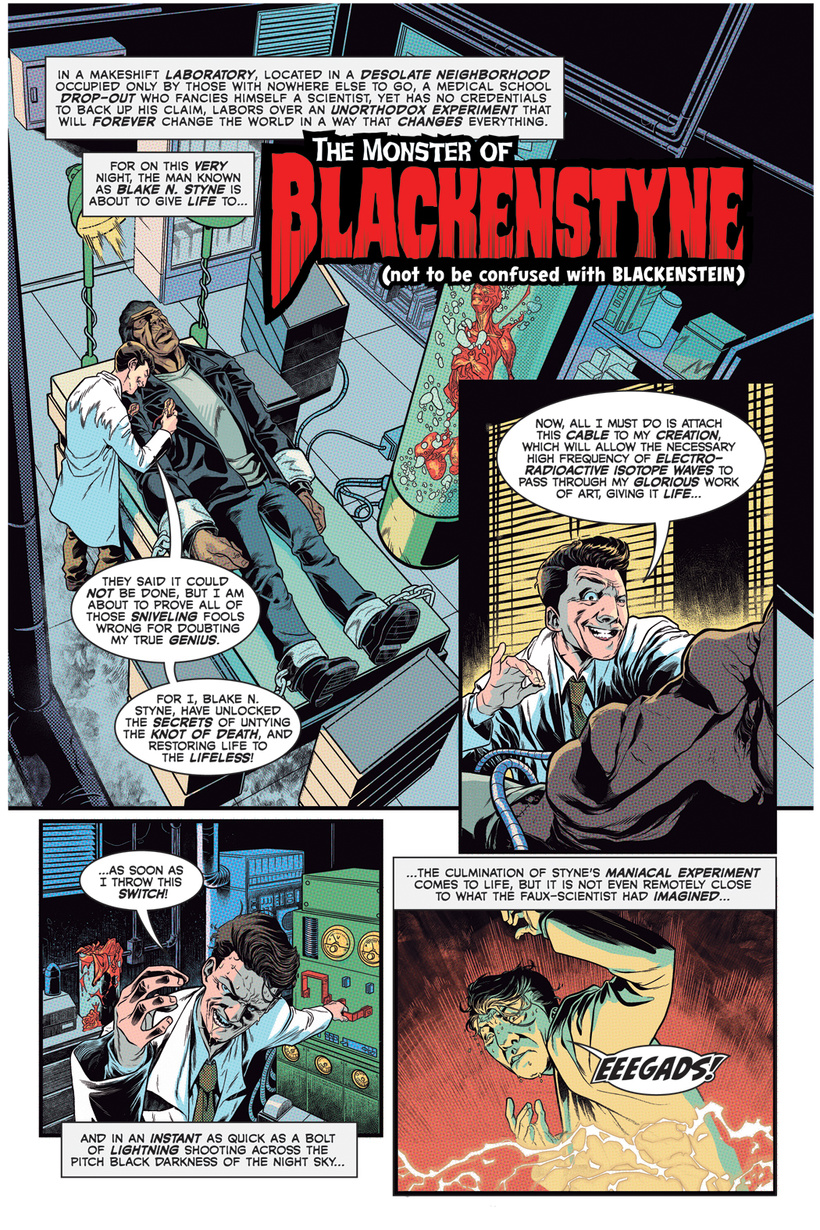
If you want to see more, please head over to Kickstarter and pledge your support for The Monster of Blackenstyne (not to be confused with Blackenstein). Here’s the link…https://www.kickstarter.com/projects/dfwalker/the-monster-of-blackenstyne
by David F Walker | May 9, 2026 | News & Updates
Every year during Oscar season, I think of a different Oscar—a director many people don’t know. On the night of the first Academy Awards ceremony in 1929, Oscar Micheaux was a decade into his directing career. He wasn’t the first black filmmaker creating movies for an audience suffering the oppression of white supremacy, but Micheaux was the most prolific. His movies embodied the “race film,” an independent cinematic movement born in response to director D.W. Griffith’s The Birth of a Nation. With forty-three movies to his credit, neither Micheaux nor his films were ever acknowledged by the Academy in his lifetime, let alone considered for one of the prestigious awards that shared his name.
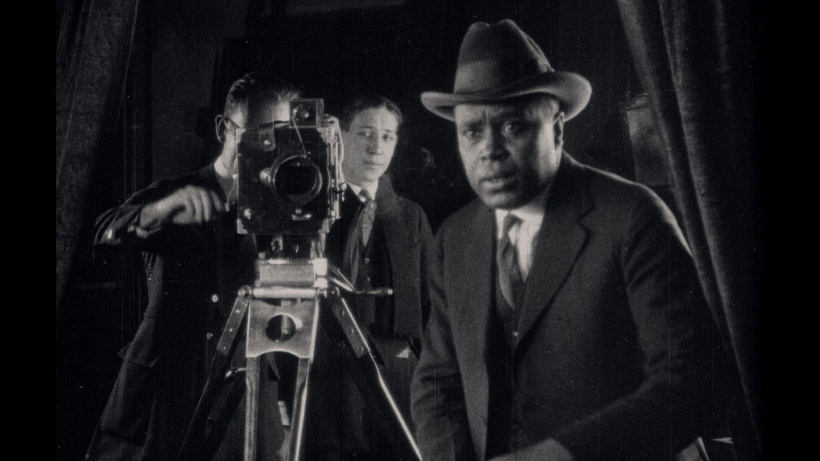
Oscar Micheaux, pioneer of the “race film.”
When examining the history of film, the contributions of black creatives like Micheaux are excluded almost as often as the discussion of the damaging effect of more than a century of distorted portrayals of African Americans. Micheaux and his contemporaries fought to bring humanity to the black image in film. And in what could easily be called a “Hollywood ending,” I imagine the spirit of Micheaux watching the 98th Academy Awards ceremony, waiting to see if director Ryan Coogler’s Sinners, the great-grandchild of the race film, will win any of its record-setting sixteen Oscar nominations, possibly sweeping the awards and earning an undeniable place in motion picture history. This scene exists vividly in my imagination, recalling the transcendent moment in Sinners, when the music of Sammie Moore (Miles Caton) pierces the veil separating the past, present, and future.
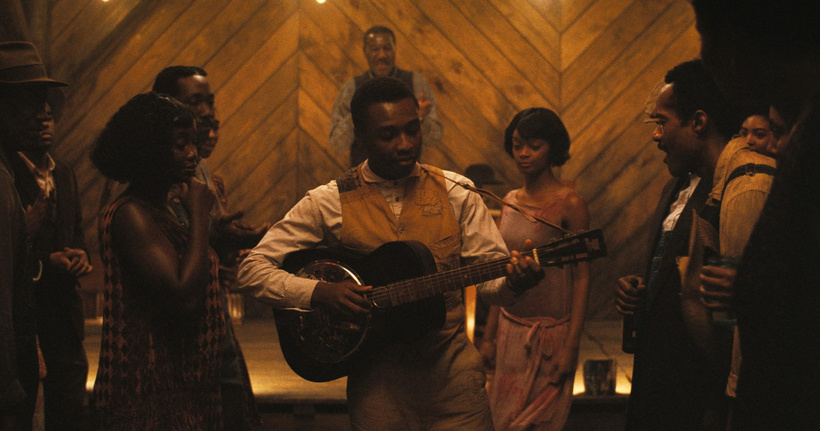
And it won’t just be Micheaux at the ceremony, the spirits of countless filmmakers, actors, artists, and technicians—most of them forgotten by history—will be seated in a row reserved for the pioneers of black cinema. Micheaux will be sitting next to brothers Noble and George Johnson, and they, along with directors like Maria P. Williams and William D. Foster, and actors like Bert Williams and Madame Sul-Te-Wan, will celebrate as award after award is bestowed upon Sinners. Some people won’t understand the jubilation of Tressie Souders, the first black woman to direct a feature film, as she embraces Hattie McDaniel, the first black woman to win an Oscar for acting, when Wunmi Mosaku’s name is read. But Dorothy Dandridge will understand, as will Juanita Moore, because those that never won an Academy Award, or were never even nominated, will be seeing the culmination of everything they did in the performances by the cast of Sinners, even if no one else sees it.
After the award ceremony, the party begins at Club Alabam on Central Avenue, the premiere black night club in 1940s Los Angeles. Cab Calloway and his band will be tearing the roof off the joint, while the Nicholas Brothers are dancing on the tables.. Spencer Williams, wearing his director’s hat, lovingly tells them to stop stealing the spotlight from Coogler and his cast and crew, but Paul Robeson reminds Williams that the celebration is for more than Sinners. “This is for all of us,” says Robeson. before making his way through the crowded room. He passes Michaeux bending Coogler’s ear, James Wong Howe talking cinematography with Autumn Durald Arkapaw, and Sidney Poitier congratulating Michael B. Jordan. With tears in his eyes, Robeson leans in close and whispers into the ear of Delroy Lindo, “Well done my good man. Well done.”
But, what if Sinners doesn’t win? What if the Academy voters don’t recognize the achievements of the cast and crew, dismissing the film because it falls under the umbrella of horror, or because the glorious blackness of the movie is too…well…black?
If that’s the case, at the same party, where Cab Calloway is leading the crowd in a call-and-response of “Minnie the Moocher,” and Harold and Fayard Nicolas are knocking over drinks as they leap from table to table, a muffled silence falls over the packed room when Orson Welles raises his glass in a toast to the crew and cast of Sinners. “The real victory doesn’t come from the awards you or your film win, but in how it is remembered after you’re gone, and what is does to elevate the artistry of this medium,” says Welles. And no one knows this better than Welles, whose Citizen Kane didn’t win Best Picture, Best Director, or Best Cinematography. Frank Capra shrugs his shoulders in agreement, because It’s a Wonderful Life shared a similar fate to Citizen Kane, having lost most of the Oscars it was nominated for, while growing into one of the most beloved movies of all time.
People forget how much James Baldwin loved the movies, and that he was a film critic. In The Devil Finds Work: An Essay, Baldwin wrote about the lies of the camera, explaining that “the camera sees what you want it to see. The language of the camera is the language of our dreams.” Referencing this as he addresses the crowd, Baldwin looks towards Ryan and Zinzi Coogler, co-producer Sev Ohanian, and the cast and crew of Sinners, reminding them that they have created a dream that speaks to the humanity of black Americans in a way few other films have done, and certainly more than any film with vampires ever should.
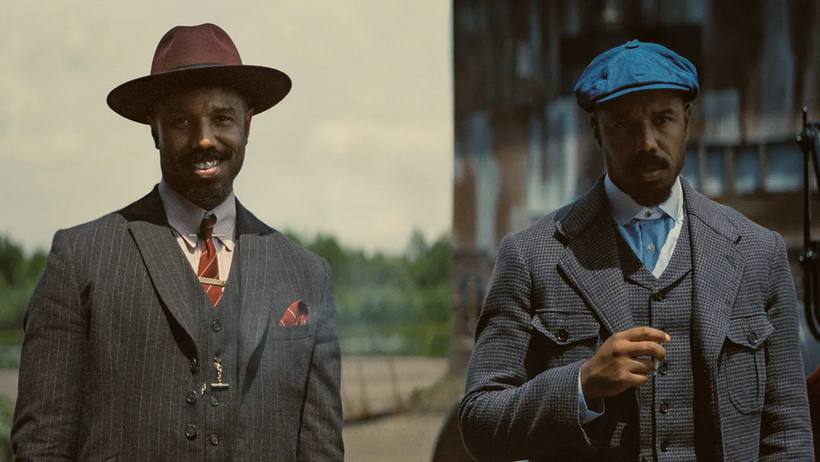
Film’s true history is a legacy built on a foundation that denies black people their humanity. The Birth of a Nation was more than a watershed moment in the art of cinematic craft; it was the immortalization of a curse placed upon black people. The Jazz Singer, the first film with synchronized sound, reinforced that curse, as Al Jolson, in blackface, stripped black people of their humanity. The cultural appropriation of blackness, dehumanization, and ugly stereotypes that plague black people were not created by film. But motion pictures and the industry it spawned was a willing accomplice in a crime that is still being perpetrated to this day. Sinners is merely one of many responses to that crime.
The real victory of Sinners won’t be measured by money earned, or awards collected. No, the real victory is the collaboration of a long and diverse group of talented people, working under the guise of making a horror film, and taking ownership of blackness. But to be clear, Sinners had more collaborators than those listed in the credits. Generations of filmmakers and artists of varying races, genders, and ethnicities gave of themselves to the art of film, making this moment possible. These are the cinematic ancestors without whom Sinners wouldn’t exist. This is the culmination of more than one hundred years of fighting to control how black existence is portrayed on the screen. And the real victory of Sinners is how a movie with vampires has given black folks the humanity that time and time again has been denied since before motion pictures began to move. – David F. Walker
Check out my new book, Black Film: A History of Black Representation and Participation in the Movies, on sale March 24, 2026 from Ten Speed Press. Order you copy HERE.
by David F Walker | May 9, 2026 | News & Updates
Thirty years ago I had no job, I was broke, and I was struggling to express myself creatively. I was trying to produce a documentary film on the history of blaxploitation, and it seemed to be going nowhere. With no clue as to how to do it, I decided to start making a ‘zine, BadAzz MoFo. I didn’t ask anyone for permission. I didn’t worry about it being perfect. And I never expected to get paid. I just wanted to make something — I needed to make something. The result was a little ‘zine that forever changed my life.
In less than two weeks my new book, BLACK FILM: A HISTORY OF BLACK REPRESENTATION AND PARTICIPATION IN THE MOVIES comes out from @tenspeedpress — nearly thirty years to the day that the first issue of BadAzz MoFo came out. It feels surreal. It feels good. Honestly, I’ve dreamed of writing a book like BLACK FILM for three decades, but for most of that time it seemed impossible. And then one day it became possible.
I talk a lot about depression and anxiety and imposter syndrome, all three of which kick my ass nearly every single day. But I also talk about pushing through the darkness, and practicing Creative Well-Being, which is essential for the survival of the soul.
by David F Walker | May 9, 2026 | News & Updates
I was told by certain publishers that The Monster of Blackenstyne (not to be confused with Blackenstein) was “too violent” to be published. Really?! Too violent?! Do these panels by Marcelo Di Chiara and Pedro Estouco look “too violent” to you?! This kind of nonsense is why I’m self-publishing The Monster of Blackenstyne (not to be confused with Blackenstein) — because the reality is that I have a story that needs to be told, and I’m not going to let anyone get in my way…or the way of the Monster. We are on Day 3 of the Kickstarter campaign, and we have reached 79% of our initial goal, which means we need around 60 backers to hit our goal. And then from there, we can focus on stretch goals, and raising enough money to help fund more stories featuring the Monster (he has an actual name, BTW — but you’ll need to get the comic to find out his origin story). Please, take a moment to check out the campaign, consider backing it, and tell your friends and family. Here’s the link…https://www.kickstarter.com/projects/dfwalker/the-monster-of-blackenstyne