
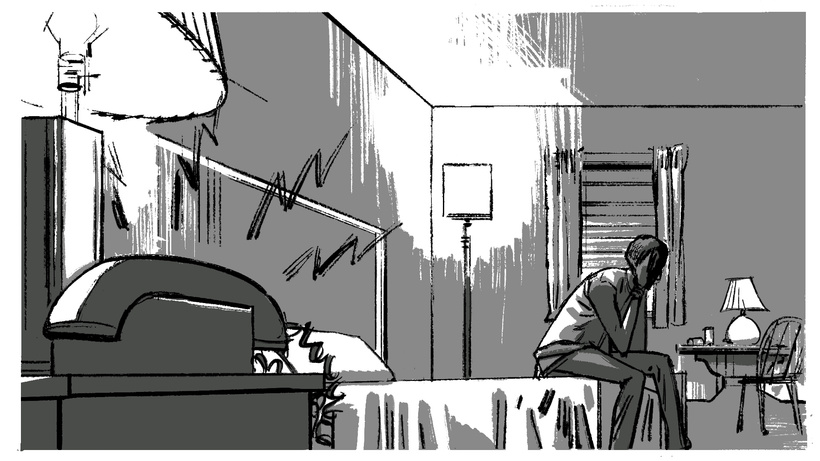
The phone wouldn’t stop ringing. At least five people had called him, and he didn’t pick up for any of them, because he hated talking on the phone. Less than a dozen people had his phone number, which meant that Barry knew whomever it was that was calling. And he knew that they knew not to call him at this hour—if at all, because he hated talking on the phone.
It wasn’t that the ringing phone had woken him, because it hadn’t. Barry barely slept since his return home from Vietnam in the spring of ’67. He’d learned a lot during the war, and picked up a ton of new habits—so many in fact, that he often thought of himself as someone else. He’d become the other Barry. In Vietnam, he became Philbear. That’s what the other soldiers called him—Philbear. It was a combination of his name, Barry, and the city he’d come from—and returned to—Philadelphia.
The other guys in his platoon had taken to calling him Philly Barry, which was quickly condensed to Philbear. Less syllables. Easier to call out in a crisis. Unless, of course, it was someone who didn’t know him that well, or had forgotten his name in the middle of a crisis—like a piece of shrapnel tearing their guts open. During those times, they’d just scream out, “Medic!”
The phone started ringing again. He knew it had to be important. Someone needed help at the clinic. Mom was worried about Dad. Dad was worried about Mom. His older brother, Ben, was worried about Mom and Dad. Barry went down the list of the handful of people with his phone number, wondering who the hell it was that kept calling.
“They should’ve gotten the hint by now,” he said to himself. Or maybe he simply thought it. There was a time when Barry could differentiate the things he thought to himself and the things he said out loud, but it wasn’t that easy for Philbear. And on some days, he wasn’t sure who he was.
Philbear was the one who hated answering the phone and talking, while Barry wondered—with genuine concern—who it was that kept calling. After more than a dozen calls, in which the phone rang at least ten times before the caller hung up, Barry decided to answer the phone.
“What?”
“You okay?” asked the voice on the other end. A ton of noise in the background made it difficult to hear, but Barry recognized the voice as his older brother, Ben.
“You the one been calling all this time?” asked Barry. He hadn’t talked to Ben in at least two months.
“What? No. Listen,” said Ben. “Something’s wrong. Something’s going on.”
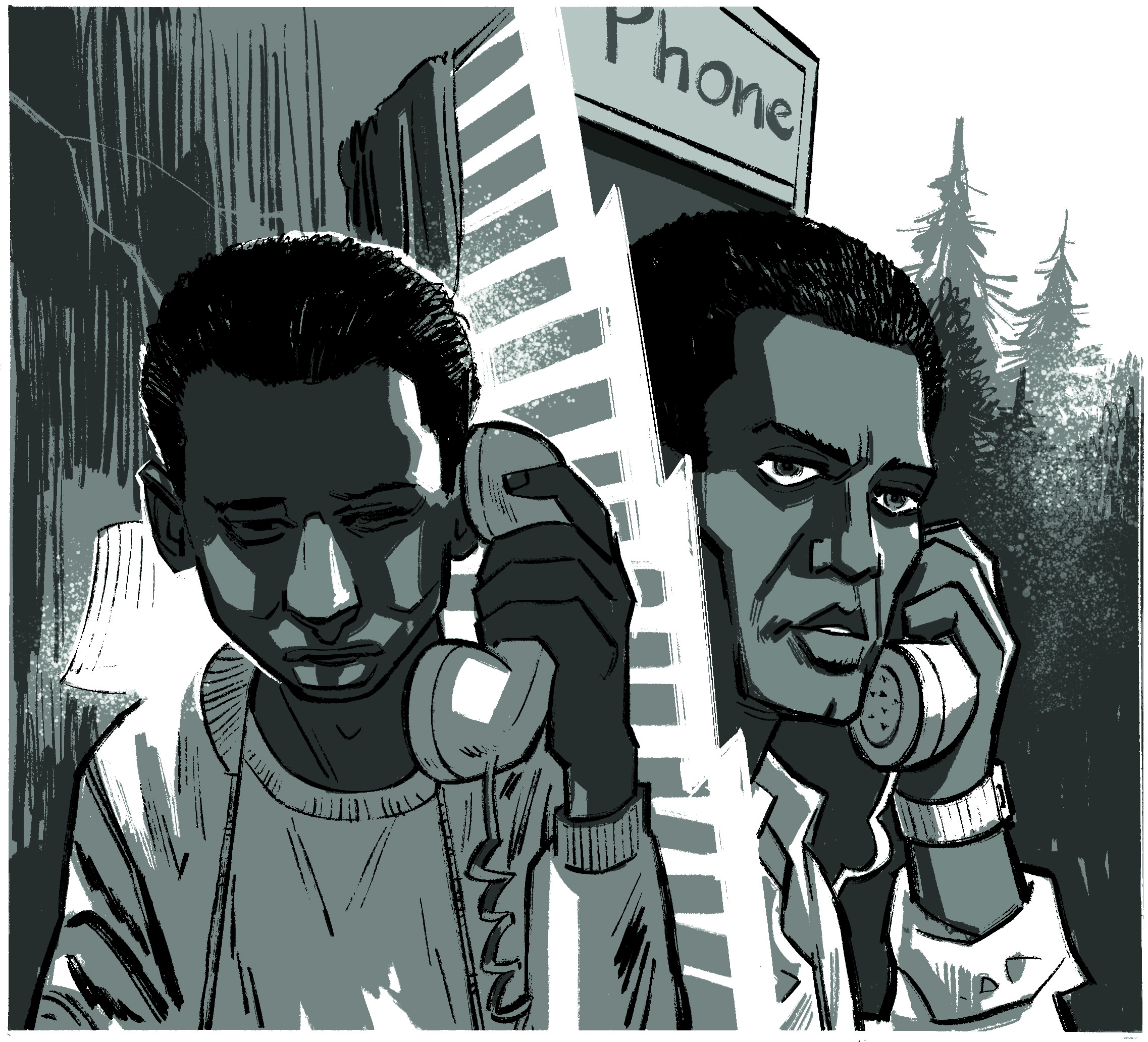
Barry strained to hear his brother over the noise in the background. He couldn’t be sure, but Philbear was fairly certain he’d heard the sound of gunfire. Not automatic weapons, but maybe shotguns, or hunting rifles. He also thought he heard screaming. “What’s going on? Where are you?”
“Not sure,” said Ben. “Somewhere north of Pittsburgh. Close to Evans City. My car got run off the road…”
“Your car got what?” Barry demanded.
“No time to explain. I can see a diner down the road—Beaman’s,” said Ben. “No, wait, Beakman’s. Beakman’s Diner. I’m gonna go there, see if anyone can help.”
“I’ll come get you.”
“No. Go check on Mom and Dad. Been calling, but their line is dead. Something’s going on.”
“Something?” asked Barry.
“I don’t know, baby brother,” said Ben. “People are going crazy. Heard some crazy bullshit on the radio about mass hysteria, or maybe some outbreak of rabies. I just need you to…”
The phone went dead.
Barry immediately dialed his parent’s phone number—one of only three numbers he had committed to memory. The other two numbers were his own, and the number of the health clinic, where he pulled long hours, pretending to be a doctor, when all he really knew how to do was stuff a person’s guts back into their body, and patch them up enough to keep them from dying immediately.
The phone at his parent’s house didn’t ring. No busy signal either. Just a weird static. He hung up, made sure there was a dial tone, and then tried calling again. Nothing.
Barry placed the phone back on the cradle. That’s when he noticed the sound. Sirens. Police. Ambulance. Fire department. All of them. He’d never heard that many sirens all at once. Every siren on every cop car, ambulance and fire truck in Philadelphia was blaring all at once, like the opening overture of a coming apocalypse. He couldn’t believe that he hadn’t heard them all before.
Then he heard the voice of his brother, as clear as if Ben was in the room, “Something is going on.”
Ben had called to get him to check on Mom and Dad. But he also called to warn him—something is going on.
Without thinking, Barry reached under the pillow and grabbed the .45 automatic. He didn’t bother to check the weapon—it was always loaded. He made a quick sweep of his tiny apartment, gathering up all the loaded magazines he had strategically hidden, and stuffed them into the small duffle bag. Real doctors carried black leather satchels filled with whatever it was they carried around with them. His bag was filled with a first-aid kit, a canteen full of water, a few MREs, and now ten fully loaded clips of ammunition for the sidearm that had returned home with him from Vietnam like a best friend.
Philbear opened the door to his studio apartment. The screaming sirens were louder in the hall. He could hear radios and televisions blaring from the other apartments. News reports of mass hysteria and civil unrest flitted through the air like bugs as he rushed past the doors of neighbors he didn’t know by name, down two flights of stairs, and out on to the street, where something was clearly going on. Something bad.
The health clinic he worked at was located in North Philly, near the headquarters of the local chapter of the Black Panther Party for Self Defense. After he came back from Vietnam, Philbear met some other brothers who had joined up with the Panthers. That wasn’t his thing—at least not completely. Philbear was done fighting, but Barry still wanted to help people, especially his people, and he respected that part of the Panther’s Ten-Point Plan.
Ben had warned him about getting involved with the Black Panthers, saying they were too militant. Like Ben was one to talk. Barry’s older brother had a reputation for being one of the most outspoken black men in all of Pennsylvania. He spent most of his time out near Pittsburgh, where his job kept him traveling along the western part of the state, but his reputation in Philly still lingered. As a kid, he’d grown up in the shadow of Ben.
Ben had always been a man of action. “Get the job done,” was his motto. He’d picked it up from his parents, who passed it on to him and Barry. The brothers shared their parent’s tenacity, but not much else. Ben had objected to Barry’s joining the Army, and Barry…well…he seemed to disagree with Ben simply on the principles derived from sibling rivalry.
Barry thought about his brother and his parents as he stepped out on to the chaotic streets. He and Ben disagreed on just about everything, except for one thing—they both loved their parents unconditionally. And as he looked around at what could only be described as madness, Barry—or more specially, Philbear—prepared himself to go to war for his parents.
The sun hung low in the sky, retreating for the day, and making way for the night. It would be dark soon, though not that dark. The light from several fires burning throughout the city had already started a weird glow that would illuminate the city once the sun had completely set.
Philbear’s first thought was that there must be rioting going on. Riots had become regular occurrences throughout a nation struggling with Civil Rights, and many cities had gone up in flames. Parts of Philly had taken a beating back in 1964. Only those fires had always been confined to certain parts of whatever city had been set ablaze—the parts of the city where black folks lived. As he looked in all directions, Philbear could see that there was no rhyme or reason to these fires. Knowing the city like he did, and knowing how to measure distances like any decent soldier, Philbear constructed a mental map of all the neighborhoods where he could see fires. None of them was contained to any specific racial or ethnic enclave, nor was economic status a factor. There were fires burning everywhere—from the richest parts of Philly, to the poorest slums, where his parents still lived, because they refused to move somewhere better.
He took off on foot, moving with a quick pace and sense of purpose, knowing that if he walked at a regular pace, it would take him only twenty or thirty minutes to get to his parent’s apartment in the Raymond Rosen Homes Housing Projects. Barry wanted to run, but Philbear reminded him to take it easy. Between the insomnia, the ringing phone, the pre-med classes at Temple University, and a double shift at the clinic, he had only slept about four hours in the last three days. Not that lack of sleep was unusual for him—he’d gone days without sleeping back in ‘Nam. But this was America—North Philly, and even though it looked like home, it also looked like a battlefield.
Philbear had to leap out of the way of an ambulance that either didn’t see him crossing the street, or didn’t care. He dove between two parked cars, landing on the hard concrete sidewalk at the mouth of an alley. Picking himself up, he swore at the ambulance driver, when he heard a scream from the alley.
At first he thought it was a mugging—some punk not much younger than him attacking an old woman. Then he realized it was the punk who had screamed for help, and that it was the old woman doing the attacking. Philbear started to laugh, thinking about how what was clearly a mugging had gone wrong. This little thug had messed with the wrong grandmother.
He moved in closer to break up the scuffle, and that’s when he saw it. Something was wrong with the old woman. Her face was a sickly color—a color Philbear had never seen on anyone that was actually alive. Her left arm was still attached, but much of the skin and muscle was missing. It was a grisly mess that looked like she had been attacked by some kind of wild animal. But that wasn’t the most disturbing part. The most disturbing part was that she was still able to use the arm, and that the undamaged hand attached to the mangled arm was reaching and grabbing for the punk kid.
Philbear stared for a moment, unsure of what was going on. The punk kid called out for help, and Barry realized he wasn’t the juvenile delinquent he’d mistaken him for. In an instant, he recognized the kid as Leroy, who worked three blocks down the street at Savini’s Market. Leroy stocked shelves and bagged groceries, which he often carried home for some of the older residents of the neighborhood.
Two bags of groceries lay on the floor of the alley, their contents spilled out and mixed in with the garbage that littered the alley—garbage that was splattered with blood. Lots of blood—the massive amount of blood that only comes when a major artery is torn open.
A few feet from the bags of groceries lay an old man. Philbear didn’t know his name—because he didn’t know the names of most people who lived in his building—but he recognized him. The old man lay motionless, most of the blood having left his body through the gaping wound in his throat.
Only a few seconds had passed since Philbear entered the alley, though it seemed like minutes, and he wasn’t even sure if he was really there. Maybe he had finally fallen asleep, and this was just another nightmare, like all the others that made sleep so difficult.
No, this wasn’t a nightmare. He could smell the garbage and the piss in the alley, which were mixed with the scent of fresh spilled blood. He knew that smell all too well. It was the smell that told him he wasn’t asleep—that this wasn’t a nightmare.
Philbear moved into action. He grabbed the old lady from behind, tried to pull her off Leroy, and was surprised by her strength—especially since she was missing most of an arm. Philbear managed to pull the woman off Leroy, but in an instant she was on him, clutching and clawing, and trying to bite him.
The old woman’s mouth was smeared with blood, her breath stank of it, and what looked like raw meat hung from her gnashing maw. Philbear cast a quick glance at the old man, lying dead amidst the garbage, spilled groceries, and his own blood, his throat torn out by what looked like an animal attack.
With all of his strength, Philbear pushed the old woman off him. She stumbled back a few steps, and then began moving back towards him. He swung his duffle bag at her, smashing her in the face and knocking her to the ground.
His adrenaline pumped, and Barry realized that he hadn’t felt like this since the war—hadn’t felt this much like Philbear in a very long time. There was a part of Philbear that was with Barry every moment of every day, but it had been a while since that side of him had come out with so much force.
Philbear rushed to Leroy. The young man was covered in blood, but Philbear couldn’t tell where the blood had come from. His training as a medic kicked into overdrive as he checked Leroy for injuries. “Where are you hurt?” Philbear asked.
“She…she just attacked us,” said Leroy. His voice had the sound of someone struggling to keep it together—trying not to go insane.
“It’s okay. I’ve taken care of her.”
The words had barely left his mouth, when Barry felt the hands grab him from behind—surprisingly cold hands. The look of shock and fear on Leroy’s face told him all he needed to know. Philbear had made the mistake of thinking he’d knocked the old woman out, when in fact he’d just knocked her down.
None of it made sense. His mind raced, trying to assess everything he knew. Then he remembered what Ben said on the phone. “Something is going on.”
Philbear struggled to break free of the old woman’s grasp, but she was relentless. Like a…rabid dog. Hadn’t Ben said something about a possible rabies outbreak?
She pulled him back toward her, and they both fell to the ground of the alley. In the fall, their positions had shifted, and the old woman was no longer behind him, but on top of him. Philbear had fought hand-to-hand before. He knew what it felt like to struggle with another human being, when either your life or theirs was at stake. This wasn’t like that. This was something else. Something different.
The old woman made a growling sound as she tried to bite Philbear. In his mind, he swore at her. Or maybe he swore out loud. He couldn’t be sure of anything, other than the fact that he wasn’t having a nightmare, rather, he was living in one.
Leroy smashed the old woman in the back of the head with an object clutched in his hand. The can of soup he’d picked up from the spilled groceries did little to deter the crazed creature disguised as an old woman.
“Hit her again,” said Philbear.
Leroy brought the can of soup down on the old woman’s head a second time, and there was a disgusting crack. The third blow to her head made an even more disgusting squishing sound, as the woman’s skull cracked open at the same instant that the can of soup exploded.
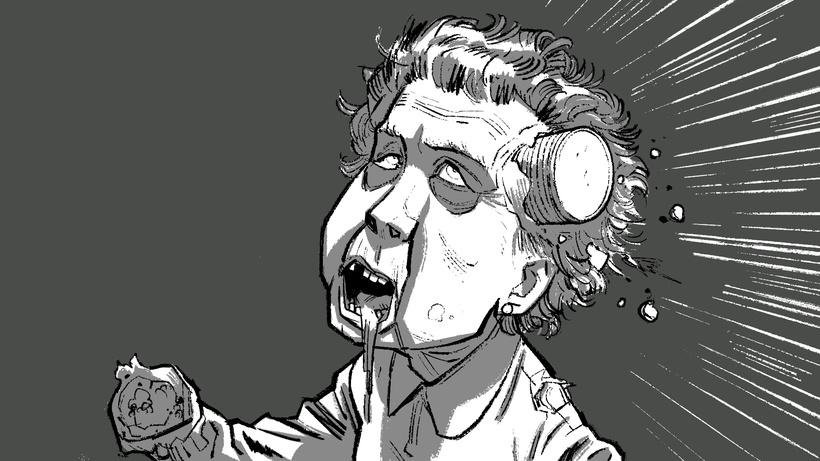
She shuddered for a moment, then collapsed on Philbear, who pushed her off, and rolled away from her. He gasped for breath, lying on his back in the alley.
Leroy stared down at him for a moment, and then hurried away to vomit.
Philbear turned his head to see the old woman laying just a few feet away from him. Her skull was split open, her brains seeping out; mixing in with what Barry assumed was cream of potato soup, and whatever else was splattered on the ground in the alley.
Leroy stumbled back over to him, his legs unsteady, his steps uncertain, like the first steps of someone who had just become a killer. Philbear knew the steps well. He’d walked them himself, seen countless other guys make that journey as well, and he knew that young Leroy, who bagged groceries at Savini’s Market, would never be the same.
“You okay, mister?” asked Leroy.
“Thanks. You saved my life,” said Philbear. He sat up, immediately feeling the exhaustion from the struggle with the old woman whose brains continued to trickle out of her ruptured skull.
A faint groan filled the alley. Both Philbear and Leroy looked at the motionless corpse of the dead woman. They’d both heard her moan like that as she attacked them. With the second moan it became clear that it wasn’t the old woman making the noise.
They both turned to look at the old man. The old man whose throat had been torn out. The old man who had been dead, because there was no way anyone with any injury like that could be anything but dead. But there he was, slowly starting to sit up, his skin a similar sickly shade to that of the old woman—to that of the lifeless bodies Philbear had helped bag back in ‘Nam.
Leroy took a few steps back. Philbear scurried away from the old man, while scanning the alley, looking for something. He spotted his duffle bag on the ground, next to Leroy.
“My bag! Toss me my bag!”
It took Leroy a moment to figure out what Philbear meant. By now, the old man had gotten on his hands and knees, as he tried to pick himself up off the ground. His moves were stiff and slow, marked by a clumsy uncertainty. And yet, he had a sense of purpose, made clear by the way his milky eyes darted back and forth from Leroy to Philbear. The old man was a predator, determining which prey to attack.
Leroy reached down and tossed the duffle bag to Philbear, just as the old man got to his feet. Philbear fumbled with the bag for a moment, pulled out his Colt .45 automatic, and flipped off the safety as he pointed it at the old man.
“Stop,” said Philbear. His voice stern and absolute in its resolve. He could’ve said more, but anything more would’ve been wasted breath.
The old man took a clumsy step toward Philbear, who on the ground, and within closer reach, must have seemed like the easier target. Philbear fired a single round, hitting the man in the leg. The old man took a second step.
Leroy let of a string of profanity that echoed those uttered by Philbear.
Philbear shot the old man a second time, in the left shoulder, just above the heart. The bullet tore a decent sized hole in the man’s body, though there was almost no blood from the wound. All of the old man’s blood had spilled out on to the grimy ground of the alley.
The old man paused after the second shot tore into him, though Philbear could tell that the momentary hesitation hadn’t been caused by pain or fear, or anything like that. The old man had merely reacted like an animal that had been momentarily distracted. The bullet from the gun may as well have been a fly buzzing around.
The old man took another shambling step toward Philbear. Two, maybe three more steps at most, and he’d be close enough to grab him with hands that Barry knew were ice cold.
Philbear fired a third shot, hitting the old man right between the eyes. The body fell so fast that it hit the ground with the same speed as the brains that erupted from the back of his head and splattered on the wall behind him.
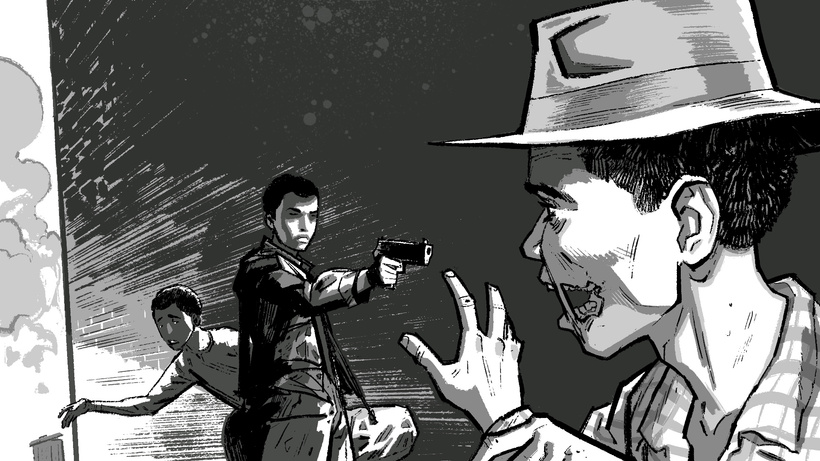
Philbear started to pick himself up. Leroy reached down, offering a helping hand. They looked each other in the eye, without saying a word. There were no words—at least not any that were appropriate for the moment. They had both just killed people in an alley in Philadelphia—two people that were not…well…like other people. They had been more like animals.
It should not have taken them as long as it did to travel the relatively short distance they traveled. Philbear and Leroy were just about to leave the alley, when Barry stopped and looked back—not at the corpses that they were leaving behind, but the spilled groceries. A voice in his head told him to gather up the food, that they might need it for later.
“We don’t have time for this,” said Leroy. He was a kid and terrified and had no clue what it meant to survive in a truly hostile environment.
Leroy pointed out that paper bags that had carried the groceries were drenched in blood, and some of the food was covered in blood and bits of brain.
“You do what you think is best,” said Philbear, removing the coat of the old man, and fashioning it into a makeshift gunnysack. “Can’t tell you what’s going on, but this food might prove to be valuable.”
Leroy thought about it for a moment before helping Philbear gather up the groceries. The two of them then decided they should check both bodies for some sort of identification. And then they took the money they found, because as Barry explained it, “We may need this, and they sure as hell don’t have any use for it.”
They said a quick prayer over the corpses, not so much because either of them really wanted to do, but because Barry felt it was something that his parents would do. And then they took off, having spent more than five minutes longer in the alley than either of them had intended, before heading north and west.
By the time they left the alley, the sun had gone down. More of the city glowed from new fires that had sprung up. Sirens screamed from every direction. More people had taken to the streets. Across the street and at the end of the block, a family of three defended itself from a group of five shambling attackers that looked like those that Philbear and Leroy had just killed. The father swung a baseball bat, trying to keep himself between the vicious assailants reaching for his wife and crying baby.
Barry stopped to consider the family for a moment. Philbear urged him to move on—to get to his parents’ place as quickly as possible. He wasn’t sure which part of him ran across the street and down the block toward the family, as he argued with himself, but it was definitely Philbear that carefully placed a single round through the heads of four of the attackers. The fifth went down when the father caved its skull in with the bat.
“Gracias,” said the father. He introduced himself as Max, his wife as Juliana, and their infant daughter as Rosa.
“Hey, man, we need to get moving,” said Leroy. He pointed to the other end of the block, where three more people, with grey, lifeless skin, began shambling towards them.
No one spoke a word, but they moved together as a group. Philbear led the way, not because he wanted to, or even because he cared about the others—he just headed where he headed, and the others seemed to follow. Every few seconds another vehicle with flashing lights and a blaring siren sped past. Screams came more frequently, as did gunfire.
They moved methodically, Philbear leading the way with the cautious steps of a man who understood the dangers of combat. He didn’t know what was going on, what they were up against, or what might be facing them as they moved steadily toward a destination that seemed miles away, instead of blocks.
By the time they reached Savini’s Market, Leroy understood why Barry had taken time to gather up the food that had been dropped in the alley. Looters poured out of the tiny market, carrying whatever they could get their hands on. From their corner across the street, where they stopped for a moment to watch the looters, it seemed like the world was coming to an end.
“This is bad,” said Max.
As if to drive home the point, Tomas Savini, the son of the original owner of Savini’s Market, stumbled out of the store. Blood flowed from a wound across his forehead, his skin had the same sickly, grayish tone as the people from the alley, and those that had been attacking Max and his family.
Old man Savini didn’t say a word, but he made an animalistic growling sound as he lunged at one of the looters. The old grocer grabbed on to a young man, pulled him close, and bit down on his arm. The young man screamed as Savini’s teeth ripped through the fabric of his coat and tore into his flesh. The young man pushed the shopkeeper away, though a huge chunk of his arm remained in the grocer’s mouth.
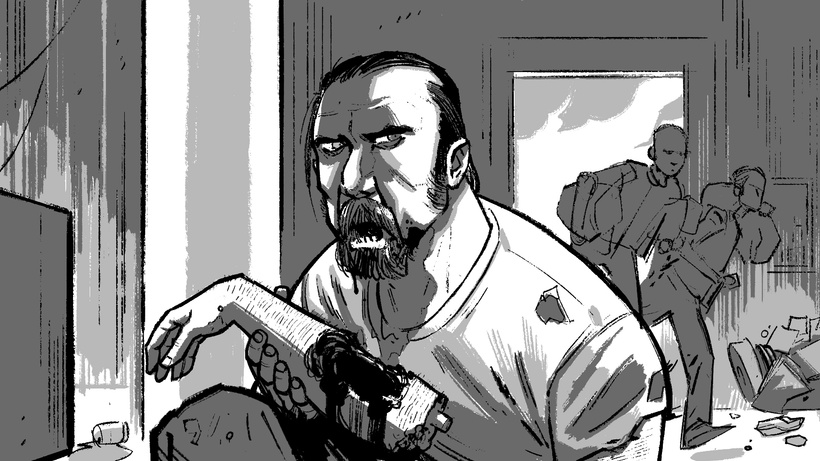
The screams of the young man caught the attention of some of the other looters. They turned to see what had happened, and then Savini lunged at another one. This one he caught and pulled close, biting into their throat. Arterial blood spray erupted from the torn jugular, as Savini and his victim fell to the ground—the old man continuing to bite into the looter as they hit the sidewalk.
Juliana gasped in terror. Leroy gagged, and had he not thrown up earlier, he felt like he would throw up again.
Two more grey-skinned figures lumbered out of the market. One was Savini’s son, Tommy Junior, the other was Gladys, a cashier. They lunged at the group of looters, who were trying to save their friend from the clutches of the elder Savini. Within moments, more blood sprayed onto the streets.
“We need to keep moving,” said Philbear.
By the time they reached the Church of the Advocate on the corner of Diamond Street and 18th, they’d picked up four others. Two had been on the run, just like Philbear and his group, and the other two had to be rescued from crazed attackers. Nine strong, they arrived at the Advocate to find it overrun with people. More than a dozen Black Panthers, armed and ready for action, formed a perimeter around the church.
Philbear led his group toward the church. They stopped dead in their tracks when a young black man leveled a shotgun at them.
“Ain’t room for nobody else,” growled the young Panther.
Philbear didn’t recognize the young brother, and wondered if he was part of the chapter from over near Germantown. He knew pretty much every Panther that hung out at the headquarters on Columbia, and they knew him. That wasn’t the case with the cats from the other side of town. Philbear looked into the eyes of the young man that he figured was somewhere between his age and the age of Leroy, thinking how easy it would be to get the gun away from him. He considered it for a moment, then let his better half take charge.
“Don’t want no trouble,” Barry said. “Just looking for some place safe.”
“Then get to steppin’, ‘cause this ain’t the place for you,” said the Panther.
“Let them through,” commanded a voice.
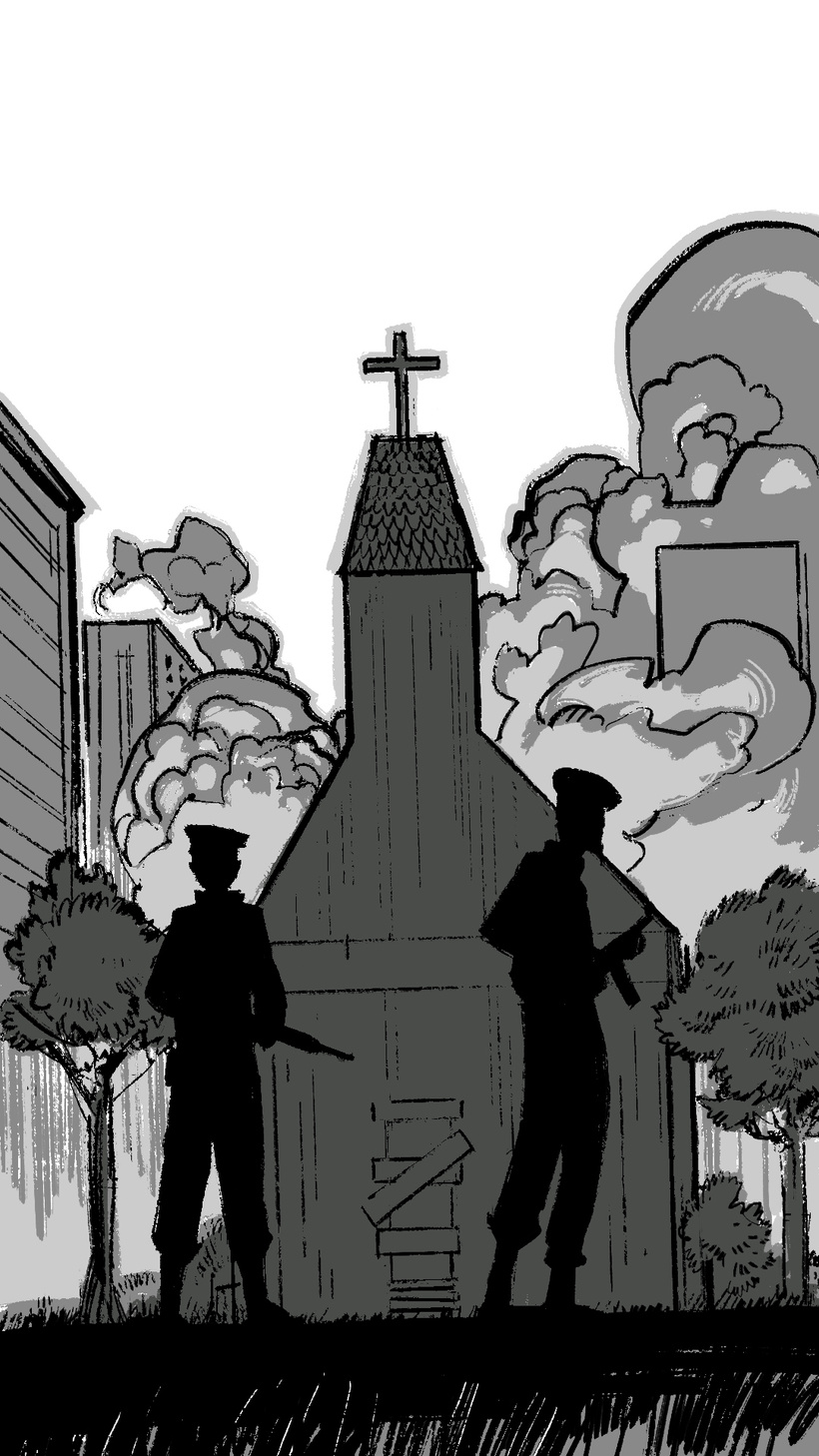
Father Paul Washington was the leader of the Church of Advocate, and one of the most respected men in North Philly. He’d become a close ally to the Panthers, and to the people on the hard-knock streets of Philadelphia. There was a saying in the neighborhood that if there was a fight of some sort, you’d find Father Paul with his sleeves rolled up. His sleeves were rolled up, and his black shirt glistened, soaked with either sweat or blood, or both.
Father Paul pushed past the Panther pointing his shotgun at Philbear, gently placing his hand on the weapon and lowering it so that it no longer pointed at anyone. Tall and lanky, with a dark complexion offset by grey hair, Father Paul had a serious look on his face, but an inviting gaze in his eyes.
It had been years since Barry had set foot in the Advocate, though it was clear that Father Paul recognized him. The man of God opened his arms, embracing Barry.
“Brother Barry,” he said, “we’ve missed you around here.”
Philbear offered a grim smile. “Wish it was under better circumstances,” said Barry.
“God welcomes all children into his house, no matter what the circumstances,” Father Paul said, leading Philbear and his group past the Panthers standing guard, and towards the church.
Tables and chairs had been set up outside on the sidewalk. “As you can see, we don’t have much room, but as long as I draw breath, no one gets turned away,” said Father Paul.
Barry handed the makeshift gunnysack full of groceries to the priest. “Here’s some food,” said Barry. “Have you seen my parents?”
“No, son, I haven’t.”
Father Paul had a sad look on his face. Like everyone else, he had no idea what was happening, but he knew that it was bad. His church was overflowing with proof of how bad things were getting. People sought refuge from a wave of violence that tore through the streets. Nearly everyone seeking the safety of the Advocate had a horrific story to tell of being attacked by another person—sometimes a friend or family member, and sometimes a complete stranger. Over the course of half a day, Father Paul had now heard similar versions of same story at least one hundred times. He had even heard—as outlandish as it sounded—some people claiming the dead were coming back to life.
He explained all of this to Barry, who thought of the old man in the alley. The old man’s throat had been ripped out. There’s no way he could’ve survived that wound, and yet he’d gotten up and attacked Philbear.
“I’m going to find my parents,” said Philbear.
Before the priest could say anything, Philbear had taken off, heading west on Diamond Street towards the Raymond Rosen Homes Housing Projects. He didn’t bother to say goodbye to Leroy, or Max, or any of the others that he’d accompanied thus far. Saying goodbye meant too much of an emotional investment in folks he doubted he’d ever see again.
Barry and his older brother Ben had grown up in a small house in the Strawberry Mansion neighborhood of North Philly, near Fairmont Park, within spitting distance of James W. Johnson Homes public housing projects. Shortly after Ben went to college, their father lost his job, and the family moved to the Rosen Projects. Barry had hoped they’d get to move in to Johnson Projects, as he knew more people there, and Rosen, which was in another neighborhood, was technically enemy territory.
Without his older brother around to protect him, Barry had to either learn how to hit harder, or run faster, if he was going to get by. He chose the former over the latter, and earned quite a reputation around the block. He hated everything about the Rosen projects, though he’d be the first to admit that whatever it was that kept him alive in Vietnam had been forged in the hellish world of public subsidized housing.
The four blocks separating the Church of the Advocate and Raymond Rosen Homes never seemed further apart than at that moment, with the moon high in the night sky, and fires burning throughout the city. People rushed past Philbear, some stopped to ask if he knew anything about anything. He told them that the Advocate was near to bursting. He asked a few people if they knew what was going down inside Rosen. All he heard was the same thing, over and over again. Stories of people attacking and being attacked. One person claimed he’d heard something on the radio—the dead were coming back to life—but that was impossible to believe.
Philbear scanned the faces of the people that rushed past him on the streets, looking for his mother and father. Rosen Projects consisted of nine buildings, all crammed with poor people that couldn’t afford a better place to live. Ben sent his parents money every week, and Barry begged them to leave at least as frequently, but Dad and Mom remained steadfast in their conviction.
A half block away, the Rosen Projects in sight, a wave of people came rushing from the various buildings. Some were carrying their belongings; others were just looking to beat a hasty retreat. They looked like the villagers that would try to flee whenever American soldiers showed up in some tiny collection of shacks in Vietnam.
Something caught Philbear’s attention—something out of place. A white police officer, carrying two small black children was part of the crowd. Police were a rare, and definitely unwelcome sight in Rosen, as well as a good many other parts of North Philly, and this one looked especially out of place amidst a sea of black faces.
Philbear rushed toward the cop, grabbing his arm before he could get away. The two black children were crying.
“What’s going on in there?” Philbear asked.
“All hell’s breaking loose,” said the cop. “Me and my partner went in on a call—dispatch has got the entire force running all over the city. Outbreaks of violence everywhere. Never seen anything like this.”
“What happened to you?” asked Philbear, noticing that the cop’s hand was covered in blood.
“Someone bit me. Can you believe that?”
“I was a medic in the Army. Let me take a look.”
“I’m good. I’ll get it taken care of later,” said the cop. “Right now, I just need to get these kids some place safe, and then come back to look for Survinski, my partner—lost track of him in all this madness.”
Before Philbear could ask any more questions, the police officer took off, blending in with the rest of crowd looking to put as much distance between themselves and the Rosen Projects as possible. Barry couldn’t blame any of them. Even under the best of circumstances, Rosen wasn’t the sort place most people wanted to be.
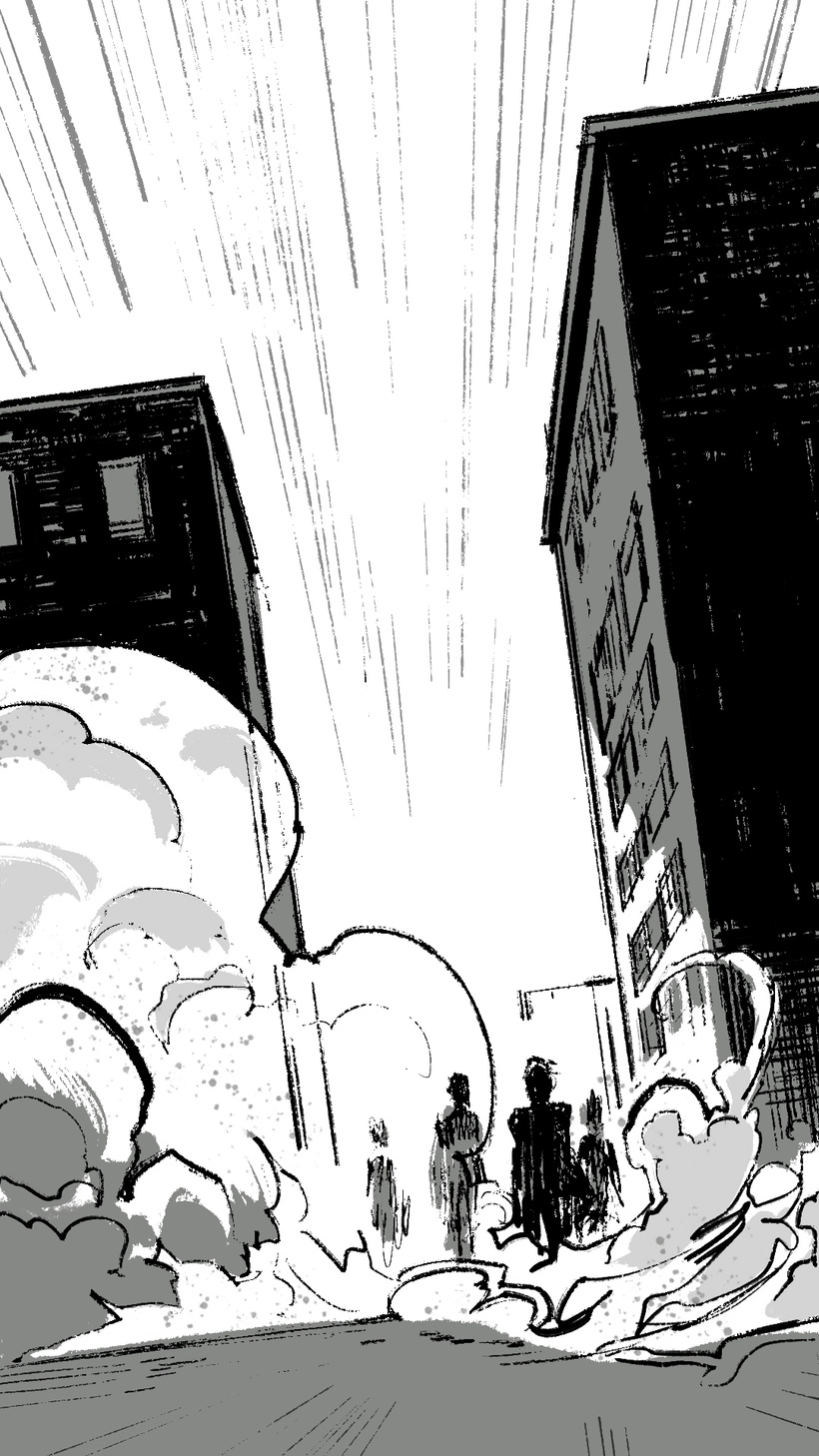
As he entered the courtyard that sat in the center of the towering buildings, Philbear saw the first of them. He knew they were there, because he could hear screams coming from all nine of the buildings. Some of them shambled about in the courtyard, seemingly going nowhere in particular. They all had discolored skin. Some were covered in blood, or had obvious wounds, and all seemed to stir whenever someone ran past.
Philbear checked his gun. He’d already used an entire magazine, and wanted to make sure that in all the confusion, he had remembered to reload his weapon. He worried that the remaining magazines would not be enough for whatever he had to face. He wondered where his brother Ben was at that moment, and hoped that it was some place much safer than Rosen Projects. The western part of the state was filled with farms, and hopefully Ben would find a nice, safe place to hunker down until everything blew over. What was the name of the diner he’d mentioned on the phone? Beakman’s?
Crouching low, and moving fast, Philbear made his way to the third building in the southwest corner of the projects. There was movement in and around some of the buildings, but not the one where his parents lived. The lights in the lobby flickered, and as he moved closer, he could see two, maybe three of them just inside the entrance of the building.
Philbear stood inside the lobby, not twenty feet from them—three of them—and he couldn’t believe his eyes. They were crouched around the dead body of a white police officer, and they were eating him. He knew the cop was dead. No one could survive the sort of damage his body had sustained. One of them was gnawing on the officer’s arm, while the other two clawed at his guts. One had a handful of intestines, and the other reached in and pulled out…something.
Philbear gagged. It was all he could do to keep from throwing up. The people—the cannibals—didn’t seem to notice him. As he moved closer, one of them looked at him, and stopped tearing into the flesh of the cop’s arm just long enough to consider Philbear, and then moved back on to its meal.
His parents lived on the fifth floor, and whether he took the stairs or the elevator, he had to get past the cannibals. He thought about the brief conversation he’d had with Ben. “Something is going on.”
The violence seemed to be everywhere. He’d seen some horrific things in the war, but nothing like the horrific, cannibalistic gorging going on in front of him. He realized that this is what the old woman in the alley was trying to do to Leroy—she wanted to eat him. Same with the old man. And the group that had been attacking Max and his family.
The world had lapsed into some sort of insanity, and there were those that had emerged from this madness in a dazed stupor and a hunger for human flesh. It seemed like something out of one of those terrible monster movies his brother took him to see on Saturday afternoons, where he would cover his eyes, but still peak through the cracks between his fingers.
Philbear leveled his gun and aimed at the head of one of the cannibals. He remembered that he’d shot the old man in the alley twice, and that neither shot did any good. It wasn’t until he shot the man through the head that something happened. Philbear didn’t know if that was the only way to stop the killers, but he didn’t have enough bullets to risk finding out otherwise. He picked his target, and with three shots, he took out the three cannibals.
He slowly moved past them making sure that they were in fact dead. He was a few feet away, when he turned to look at the cop. The cop’s body was torn to shreds. His torso looked like it had been hollowed out. Bits of his flesh and muscle and organs were splattered on the floor around him. And in the holster of his belt was a gun.
The thought of it disgusted him to no end, but he had dealt with blood and guts before, and he needed the extra gun and ammunition. Moving in close, he could see the officer’s name tag on what remained of his uniform—Survinski. That was the name of the other cop’s partner.
Philbear fumbled with the corpse of Officer Survinski, nearly slipped and fell from stepping on what he thought was the cop’s spleen, and after a few minutes, managed to work the entire belt free. He had the gun, the bullets, and the nightstick.
Philbear turned to walk away, and that’s when he heard the groan. It was similar to the sound made by both the old woman and the old man in the alley. It came from Survinski.
He closed his eyes for a brief moment. He wanted to think he was having a nightmare, but again, there was the smell—and not just the smell of blood. Philbear opened his eyes, and turned to see what he hoped he wouldn’t see.
Officer Survinski struggled to sit up. So much of his guts and internal organs had been eaten or spilled out on to the floor that he essentially had no middle. The cop rolled over, and his exposed, bloody ribcage made a terrible scraping sound against the floor. Survinksi reached his one good arm out toward Philbear, groaning a low, mournful wail—the sound of the living dead.
It wasn’t possible, and yet there it was, right in front of him, reaching out for him. Back at the church, Father Paul had mentioned that some people claimed the dead were coming back to life. It sounded ridiculous then, and it still sounded ridiculous. But as unbelievable as that statement sounded—the dead were coming back to life—it was drowned out by the deafening roar of reality.
Philbear looked down at the dead police officer pulling itself toward him, its bloody ribcage making a wet, scraping sound as it moved across the floor. He pointed the gun at its head, took careful aim, and then stopped himself from squeezing the trigger. He only had so many bullets, and there was no telling what he might run across on his way to find his parents.
Philbear lowered the gun. Or maybe it was Barry who lowered the gun. He couldn’t tell which part of his persona was in charge at the moment. He was becoming someone new, just as he’d done when his family moved from Strawberry Mansion to Rosen Projects, and as he’d done when he went to Vietnam. His very survival had necessitated transformation. Deep down in the core of his being, he knew that this is what needed to happen. If he was going to survive this night of the living dead, Barry and Philbear were going to have to reconcile their differences and become one.
He thought of his brother Ben. The smart one. The calm, cool, and collected one. Some day, hopefully, soon they’d be together again, and they could swap stories about how they survived this night. Ben, hanging out in some diner out near Evans City—his story would probably bore his brother to death. The thought of that made him smile—not Philbear or Barry, but both, at the same time.
He turned and headed toward the staircase that would lead to his parent’s apartment on the fifth floor. The reanimated corpse of police officer Survinski dragged itself after Barry Hampton, though it would never catch him.